
Reviewed · 3-DAY TOURS IN THE DANAKIL
2-Night 3-Day Danakil Depression Tour without Flights
The best reason to take this trip is the sheer oddness of the Danakil Depression: salt flats below sea level, sulfur-colored ground, camel trains, and an active volcano reached by a rough night trek. It is not a polished sightseeing circuit. It is hot, dusty, basic, and memorable in equal measure.
I like that the $300 price covers the hard-to-arrange essentials, including a 4WD vehicle, food, water, camping gear, local Afar support, entrance fees, and security. I also like the mix of Erta Ale, Dallol and Lake Giulietti, since you see both volcanic activity and the long-standing salt trade.
The main caution is comfort. You spend three days outdoors with no regular bed, shower, or toilet, and the trek to Erta Ale requires fitness. Also, the crater has recently partly collapsed, so you may not see open lava despite that being a central part of the plan.
Key points at a glance
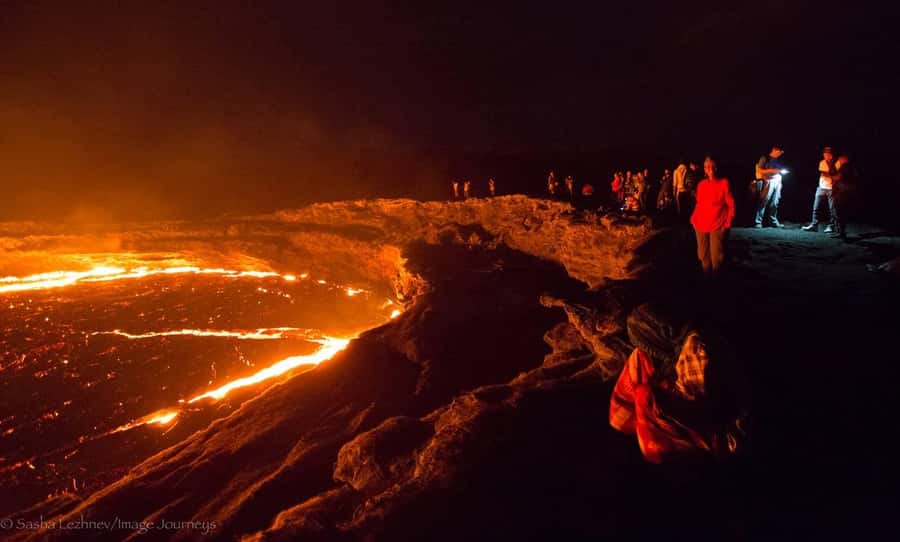
- Erta Ale requires a serious walk: You trek up after the vehicles carry your food and camping supplies to the rim.
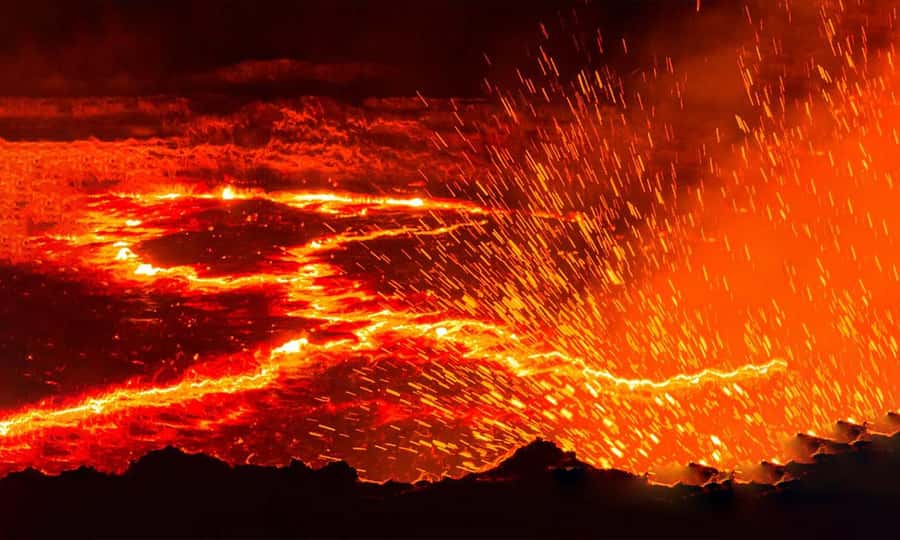
- The lava view is not guaranteed: Recent conditions have left the crater partly collapsed, so check the latest status before booking.
- Lake Giulietti sits more than 100 meters below sea level: It is a saltwater lake in one of the planet’s deepest depressions.
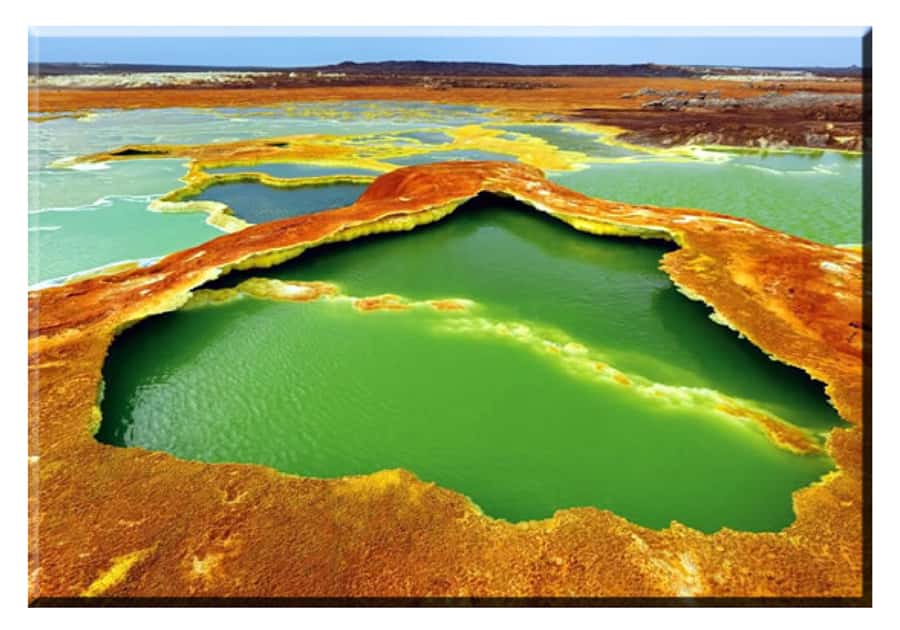
- Dallol is a color lesson in volcanic chemistry: Expect unusual salt formations and sulfur-stained ground rather than a conventional scenic viewpoint.
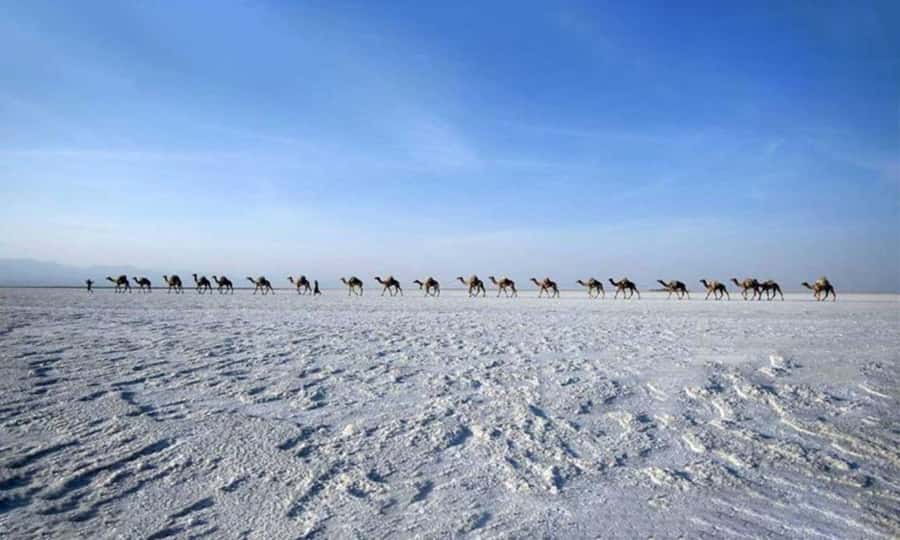
- The salt trade is part of the experience: At Ragad, you can see salt cut into blocks and loaded onto camels.
- Flights are extra: The tour begins with the Addis Ababa to Semera flight and ends with a return flight, but neither ticket is included in the $300 price.
Why the Danakil Depression feels unlike a normal tour
I think of this trip as an expedition with a tour structure, not a relaxed holiday. The Afar Region is one of Ethiopia’s harshest settings, and the program moves through open salt country, volcanic ground, and very hot lowlands.
The attraction is not one single sight. It is the change in scenery from one day to the next. You begin with Erta Ale, a broad active volcano known in the Afar language as smoky mountain. You then move toward Lake Giulietti, salt flats, Hamedela, Ragad, Dallol, and Lake Assal.
That variety gives the trip real value. If the lava is not visible, the journey still includes the salt-mining economy, camel caravans, colorful deposits, and some of the lowest ground on Earth. I would still book it for the full sequence, not only for one volcano view.
At the same time, you need to accept rough conditions without expecting the schedule to feel smooth. Roads are handled by 4WD Land Cruisers, but that does not turn the trip into an easy ride. Walking takes place on uneven ground, and the heat can make short distances feel long.
More 3-Day Tours in the Danakil
- 3 Days Danakil Depression Tour
★ 4.5 · 135 reviews - 3 Days Danakil Depression Tours Via Semera
★ 5.0 · 47 reviews - 3 Day Danakil Depression Ertale and Dallol Tours
★ 5.0 · 44 reviews
Day 1: Semera to Erta Ale by 4WD
The trip begins with an early flight from Addis Ababa to Semera. The stated flight is ET110, departing at 6:45 in the morning. Your driver meets you at Semera Airport, and the road journey toward Erta Ale begins from there.
This flight is important when you calculate the real price. The tour costs $300 per person, but the round-trip airfare is separate. You should also allow for personal expenses, since those are not covered.
The drive toward Erta Ale is part of the story. You are heading into the Afar Region, a place shaped by volcanic forces and extreme heat. The volcano has a base diameter of about 30 kilometers, with a summit caldera roughly one kilometer square.
After a break, you begin the climb toward the rim. The exact walking conditions can vary, but the instructions are clear: this is a challenging trek, not a short stroll from a parking area. Vehicles carry camping equipment and food to the rim, which keeps you from hauling a full load uphill.
That arrangement is practical. You still need proper shoes, water discipline, and enough fitness to walk over rough ground, but you are not carrying every cooking and sleeping item yourself.
The night at the volcano is the trip’s great question mark. Erta Ale is famous for its permanent lava lake, and the plan is to watch the boiling lava from the rim. Yet recent conditions have included a partly collapsed crater, with no visible lava. I would treat the volcano as an active geological site first and a guaranteed lava spectacle second.
You may spend the night watching glowing activity, or you may see a darker, more enclosed crater. Either way, the setting is stark and unusual. The absence of a normal camp also matters: expect outdoor sleeping, no shower, and no regular toilet facilities.
The overnight camp and what to pack
The packing list looks simple, but each item earns its place. You need comfortable walking shoes, warm clothing, sunglasses, a hat, sunscreen, and a flashlight.
Warm clothing may sound strange for one of the hottest places on Earth. The night at elevation can feel cooler than the daytime, and the program specifically advises bringing warm layers. Lightweight clothing is useful for the hike, while a warm layer helps after dark.
A flashlight is not an optional gadget here. You need it for movement around a basic camp and for the night portion of the Erta Ale experience. A camera is worthwhile, but protect it from dust and keep your attention on your footing.
The tour provides bottled water, meals, cooking equipment, and camping equipment. That removes several logistical worries, but it does not mean water is unlimited for every personal preference. I would drink regularly, follow the guide’s advice, and avoid treating the heat casually.
The outdoor setup is the biggest comfort issue. A recent trip account describes three days without a bed, shower, or toilet. That is not a minor detail. If you need private facilities or sleep badly outdoors, this tour may feel punishing rather than adventurous.
Day 2: Sunrise, crater pits, and Lake Giulietti
Day two starts early, with a sunrise visit to the northern pit crater. You then walk about five minutes to the southern and central pits.
The main pit is described as about 200 meters deep and 350 meters across. The smaller southern pit is about 65 meters wide and roughly 100 meters deep. These measurements help you understand the scale. You are not looking at a small smoking hole. You are looking into a large volcanic system with several distinct openings.
The morning timing makes sense. The light is better for seeing the crater forms, and the heat is less severe than later in the day. You return toward Dodom at around 9 in the morning, reach camp around 10:30, and have time to rest after breakfast.
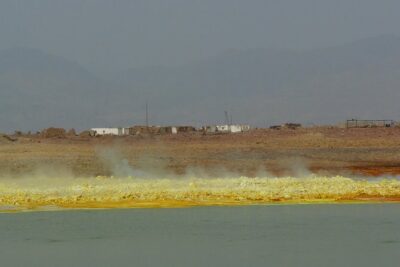
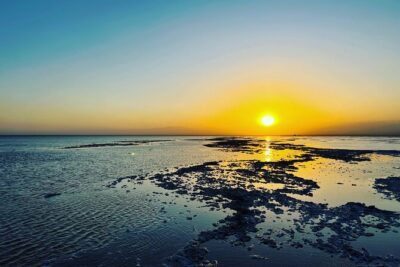
That rest matters because the second half of the day involves another long drive. The route continues toward Lake Giulietti, a saltwater lake more than 100 meters below sea level.
I like this stop because it gives the tour a different kind of drama. Erta Ale is about heat, height, and volcanic power. Lake Giulietti is about depth below sea level and the slow work of salt and evaporation. The two places show different sides of the Afar environment.
You also visit salt flats where Afar people obtain salt by evaporating lake water. This is not just a scenic stop. It connects the natural setting to a working local economy. Salt is not an abstract geological feature here. It is collected, processed, carried, and sold.
The route continues through Erbiti toward Abaala and Hamedela, where you spend the night. The day combines an early crater walk, recovery time, a long drive, and salt-flat visits. You should expect a full day even though much of it is spent seated in the vehicle.
More three-day trips from Addis Ababa:
- 3 Days Dankile Depression group Tours
★ 5.0 · 40 reviews - Trekking at Bale Mountains 3 Days
★ 5.0 · 28 reviews - 3 days around Arbaminch and Konso Adventure Tours Life Time
★ 5.0 · 24 reviews - 3 Days Omo Valley Tour
★ 5.0 · 24 reviews
Hamedela and the reality of a remote night
Hamedela is your base for the second night. The program describes accommodation as included, but the wider instructions make clear that this is basic outdoor travel rather than hotel accommodation.
I would plan around simplicity. Bring your patience, keep your essentials close, and do not assume that a remote camp will offer the comforts found in Semera or Addis Ababa. The value here is access to places that are difficult to reach independently, not a soft bed at the end of every day.
The local support system is one of the stronger parts of the arrangement. The price includes an Afar-region guide, drivers, cooking support, camping equipment, and scout and police services. Those services matter because the route is remote and the environment is demanding.
English is the listed guide language. One useful practical warning is that not every driver may speak English well, so save detailed questions for the English-speaking guide. That does not need to spoil the trip, but it helps you set expectations about communication inside the vehicle.
Day 3: Ragad salt blocks, camels, and Dallol
The final day starts with a drive to Ragad, also called Asebo. This is where local workers mine salt from the ground.
You can see salt being broken out, cut into rectangular pieces, and loaded onto camels. For me, this is one of the most valuable parts of the itinerary because it shows people working within the same harsh environment that creates the scenery.
The camel caravans also give the salt flats a human rhythm. You are not simply looking at white ground and colored mineral deposits. You are seeing a transport system built around the resources of the region.
The work is physical and direct. Salt is extracted, shaped, and carried. That makes the stop more meaningful than a quick photo break, especially if you take time to watch the process rather than rushing to the next viewpoint.
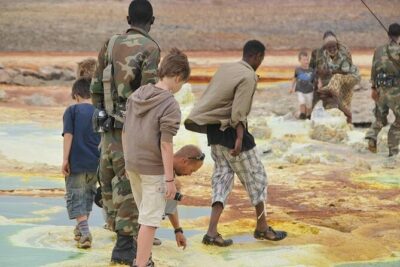
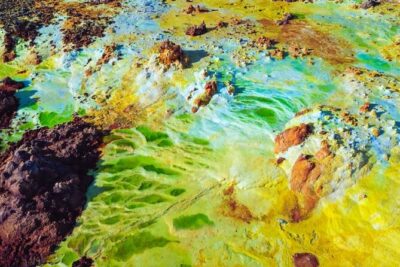
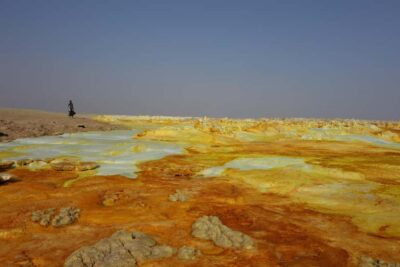
After Ragad, you drive toward Dallol. The area was formed by volcanic activity and is known for unusual colors in the salt deposits. The ground can look almost unreal, with mineral staining and formations that differ sharply from the black volcanic terrain near Erta Ale.
The word colorful can make Dallol sound cheerful, but this is a severe place. The colors come from salts and volcanic processes, not gardens or painted buildings. You should stay with the guide, follow safety instructions, and avoid treating the area like an ordinary walking trail.
The itinerary also includes Lake Assal and a chance to follow camel caravans. This adds another low-lying salt-water setting to a day already full of mineral formations and human activity.
Finally, you drive back to Semera for the flight to Addis Ababa. The return flight is not included in the tour price, so confirm the timing before you book. The schedule is long, and delays or changes would matter if you are connecting to another flight.
What the $300 price really covers
At $300 per person, the tour can be good value if you want a guided route through a difficult region. You receive surface transport in a 4WD Land Cruiser, fuel, driver allowance, meals, bottled water, entrance fees, licenses, camping equipment, cooking support, local guiding, and regional security services.
Arranging those pieces separately would be difficult. The vehicle alone is central to the experience, since the route includes rough access roads and remote stops. Local support is also more than a nice extra. It helps connect you with the region and makes the logistics manageable.
The price does not include the flights between Addis Ababa and Semera. It also excludes personal expenses. Once airfare is added, the total cost is higher than the headline figure, so compare the complete trip budget rather than judging the tour on $300 alone.
I would also ask for the current departure schedule, the latest Erta Ale crater condition, and exactly what sleeping arrangements are being used. These questions are especially important because the volcanic feature can change and the comfort level is basic.
Who should book this three-day trip
I would recommend it to you if you want unusual geology, accept rough conditions, and are comfortable walking in heat over uneven ground. You should be reasonably fit, able to handle a challenging trek, and willing to spend long hours outside or in a 4WD vehicle.
It suits a person who values access and local context more than comfort. The salt mining at Ragad, the camel caravans, the Afar guide service, and the low-lying lakes give the trip substance beyond a volcano photo.
I would not recommend it for children under 12, pregnant women, or people with back or heart problems, as stated in the tour restrictions. The physical demands are also a poor match for anyone who dislikes heat, basic camping, or uncertain volcanic conditions.
The activity is described as wheelchair accessible, but the same program requires a difficult trek and extended walking on uneven terrain. I would contact the operator before booking if you use a wheelchair or have limited mobility, since the individual parts of the route may not offer the same level of access.
Free cancellation up to 24 hours before departure and a reserve-now, pay-later option give you some booking flexibility. They do not remove the need to check the weather, flight timing, and volcano conditions before you commit.
My verdict on the Danakil Depression tour
You should book this tour if you want one of Ethiopia’s most unusual natural areas and understand that the experience is physically demanding, hot, and basic. The combination of Erta Ale, Lake Giulietti, Dallol, Lake Assal, and the salt trade makes three days feel purposeful rather than repetitive.
I would not book it solely to see flowing lava. Current crater conditions may prevent that, and the latest available information indicates that the volcano has partly collapsed. Book it for the whole Afar experience, then treat visible lava as a bonus.
At $300 before flights, the package offers useful value because it gathers transport, food, water, guides, camping, permits, and security into one arrangement. Bring sturdy shoes, sun protection, warm clothing, a flashlight, and realistic expectations. If you can trade comfort for rare scenery and a close look at salt-mining life, this is a powerful trip.
FAQ
Are flights included in the $300 price?
No. The tour price excludes the round-trip flight between Addis Ababa and Semera. The schedule uses flight ET110 from Addis Ababa at 6:45 in the morning, followed by a return flight from Semera after the tour.
What is included in the tour?
The price includes entrance fees and licenses, accommodation, meals, bottled water, 4WD surface transport and fuel, driver allowance, local Afar guiding, cooking and camping equipment, and scout and police services in the Afar Region.
Is the Erta Ale trek difficult?
Yes. Physical fitness is required, and the route includes significant walking over uneven ground. The camping materials and food are transported by vehicle, but you still need to complete the trek to the volcano rim.
Will I definitely see boiling lava at Erta Ale?
No. The plan is designed to show volcanic activity and boiling lava, but conditions can change. The crater has recently partly collapsed, so you should confirm the current volcanic view before booking.
What should I bring?
Bring comfortable walking shoes, warm clothing, sunglasses, a hat, a camera, sunscreen, and a flashlight. Light clothing is suitable for hiking, while warm clothing is useful for the night near Erta Ale.
Who should not take this tour?
The tour is not suitable for children under 12, pregnant women, or people with back or heart problems. Anyone with limited mobility should check directly with the operator because the program includes a challenging trek and extended walking on uneven terrain.
Just added around Addis Ababa
- Best of Addis Privet Guided city Tour★ 5.0 · 6 reviews
- Debre Libanos Monastery & Scenic Portuguese Bridge Tour★ 5.0 · 4 reviews
- Addis Night Life yod Abissinia★ 3.8 · 4 reviews
- Day trip Adadi Mariam, Melka Kunture and Tiya stele★ 3.1 · 5 reviews
- Addis Ababa: Entoto hill and Mercato Market layover tour★ 5.0 · 5 reviews
- A perfect day trip to Lake wenchi from Addis Ababa★ 5.0 · 3 reviews
- Addis Ababa city tour from Bole airport and All Hotels★ 4.0 · 3 reviews
- Addis Ababa Essentials: Flexible Full-Day City Sightseeing★ 5.0 · 3 reviews
3-Day Tours in the Danakil, compared.
3 Day Danakil Depression Ertale and Dallol Tours
Read our review →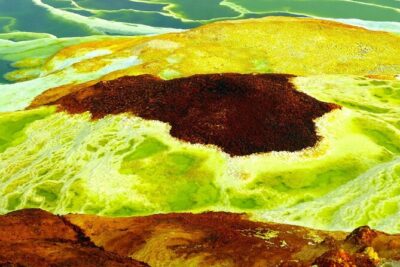
3 Days 2 Nights Small Group Danakil Depression Tours
Read our review →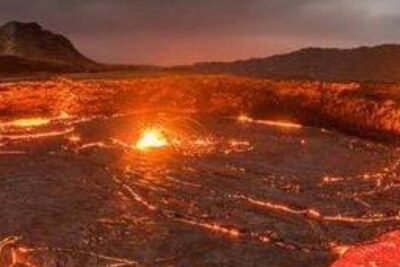
Browse the lists this tour appears in