
Reviewed · CITY TOURS
Addis Ababa City Tours
Addis Ababa’s story comes together in striking pieces here: Lucy’s 3.2-million-year-old skeleton, the crowded lanes of Merkato, the octagonal form of St. George’s Cathedral, and the eucalyptus-covered slopes of Mount Entoto. In one long day, you move from human origins to modern city life, with plenty of Ethiopian history between the two.
I like the way this tour combines major museums with ordinary shopping streets. I also like the practical setup: an air-conditioned minivan, a driver-guide, entrance fees, and pickup from your hotel or the airport. Guides named Mickey, Mulate, Getachew, Alex, Haile, and Yosef have led similar outings, so the exact guide may vary.
The main caution is the price: $600 per person is a serious outlay, especially if you are traveling alone. Traffic can also stretch a planned seven-hour day, and the schedule covers a lot of ground. You will see more with a guide, but you will not linger everywhere.
Key points at a glance
- Lucy and Selam: The National Museum brings Ethiopia’s place in human evolution into clear focus.
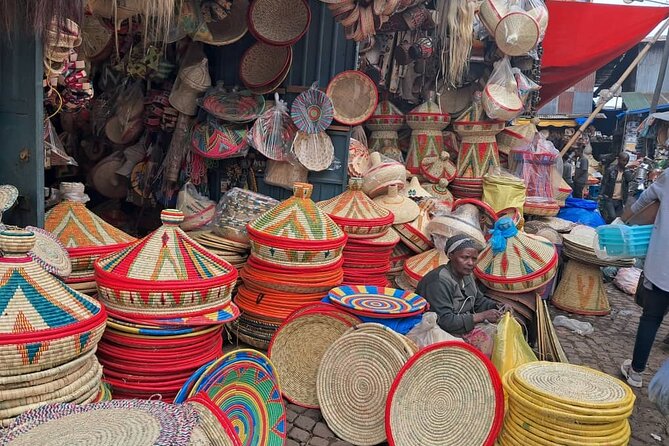
- Two very different markets: Shiro Meda is suited to browsing textiles and gifts, while Merkato is a much larger, more intense commercial district.
- A guide makes the city easier: The route covers several districts that can be difficult to connect on your own in one day.
- History with emotional weight: St. George’s Cathedral and the Red Terror Martyrs Memorial Museum offer very different views of Ethiopia’s past.
- Mount Entoto finish: The high slopes provide a cooler setting and broad views over Addis Ababa.
- Useful for a layover: Pickup, drop-off, transport, and admission fees make this a practical choice when your time in Ethiopia is short.
What this Addis Ababa day tour really covers
This is an ambitious city introduction, not a slow neighborhood walk. The advertised duration is about seven to eight hours, though some outings have run closer to nine hours when guests wanted extra time.
The route is built around seven main stops. You visit two museums, two markets, a cathedral, Meskel Square, a memorial museum, and Mount Entoto. That range is the tour’s central strength. You get archaeology, religion, politics, shopping, and city views in one day.
Transport is by air-conditioned minivan, with a maximum group size of 10. That is small enough for questions and conversation, though the experience may feel more personal when the booking turns out to be private or lightly attended.
The tour description offers pickup at a hotel or the airport, while the meeting information lists Edna Mall on Cameroon Street as the starting point and says the activity ends back at the meeting point. Since the details point in more than one direction, confirm your exact pickup and final drop-off location before you set out.
More city tours in Addis Ababa:
- Addis Ababa Guided City Tour With Airport & Hotel Pick Up
★ 5.0 · 237 reviews - Full-Day Private City Tour of Addis Ababa
★ 5.0 · 147 reviews - Addis Ababa Authentic Private City Tour
★ 5.0 · 134 reviews
Lucy at the National Museum of Ethiopia
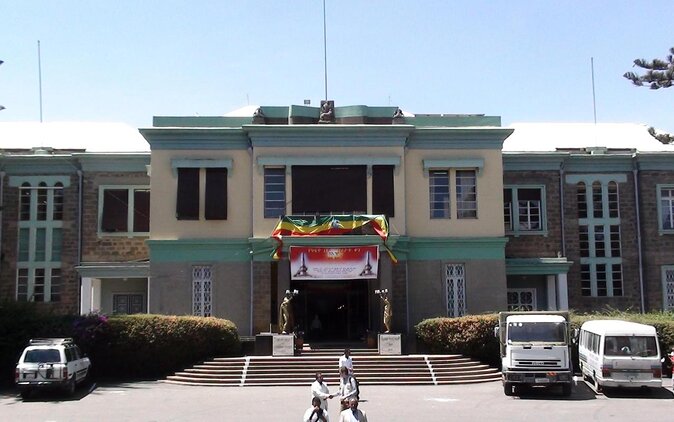
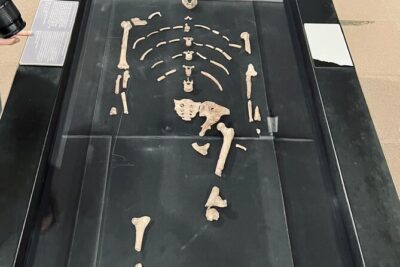
Give the National Museum about two hours. This is the intellectual heart of the day, and it deserves more than a quick photo stop.
The museum is home to Lucy, the famous early hominid fossil discovered in 1974 near Hadar. The displays also include Selam, estimated at about 3.3 million years old and described as the earliest child found in the human fossil record. Seeing these remains in Ethiopia gives the subject a strong sense of place. This is not just a display about distant prehistory. It connects the country directly to one of the central chapters in human development.
The museum also covers archaeology, ancient and medieval objects, royal regalia, artwork, and everyday arts and crafts from Ethiopia’s many peoples. Your guide can help connect these sections, since the range may otherwise feel broad and uneven.
One practical warning matters here. The museum has been closed unexpectedly at times, and one outing had to proceed without seeing Lucy. If this museum is your main reason for booking, confirm its opening status before the day begins. A good guide should adjust the order or explain the alternatives, but no tour can guarantee access during an unforeseen closure.
The Ethnological Museum and the former palace setting
The next museum stop lasts about an hour. The Ethnological Museum occupies the main campus of Addis Ababa University and houses the Institute of Ethiopian Studies.
Its focus is different from the National Museum. Instead of concentrating on fossils and archaeology, it presents objects connected with Ethiopian culture, music, anthropology, and daily life. That makes it a useful partner to the first museum. You move from the long story of human origins to the customs and creative work of the country’s living communities.
The museum is also the first university museum in Ethiopia. The setting gives the visit a more academic feel than a standard city museum, though the amount of time is still limited. If you enjoy cultural displays, you may wish the tour allowed longer here. If museums are not your main interest, one hour keeps the stop manageable.
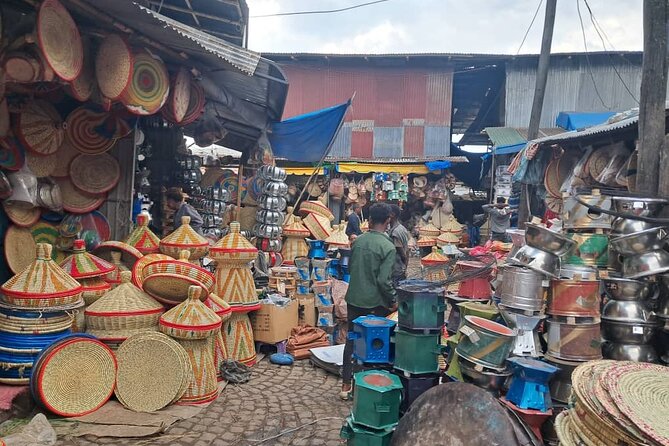
Shiro Meda for cotton, embroidery, and bargaining
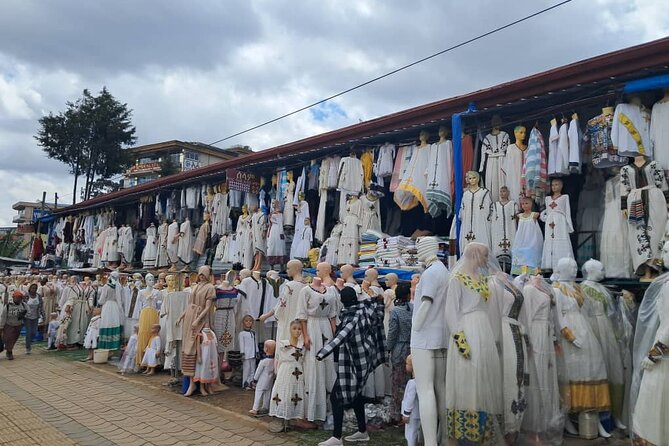
Shiro Meda is a smaller market stop of about 30 minutes. It is known for handwoven cotton clothing, especially women’s scarves and dresses decorated with colorful embroidery.
This is the easier market for shopping. You may find scarves, shirts, necklaces, earrings, and small gifts in a more contained setting than Merkato. Bargaining is expected, so take your time, ask the price, and negotiate politely. If you want locally made textiles without committing to a long shopping session, this stop fits well.
Half an hour is enough for a look and perhaps a purchase, but not enough for extensive comparison. You might also feel some pressure to buy, as is common in markets aimed at visitors. Keep your expectations sensible: the point is to see the craft and practice bargaining, not to conduct a full textile survey.
A few more Addis Ababa trips worth weighing up
- Full Day Tour of Addis Ababa with Hotel Pickup and Drop-off
★ 5.0 · 430 reviews - Taste of Ethiopia
★ 5.0 · 406 reviews - Day Trip From Addis Ababa See Historical Monastery,Stunning Nature,Animals,Birds
★ 5.0 · 303 reviews - Addis Ababa: Debre Libanos, Blue Nile Gorge, and Cave Tour
★ 4.5 · 256 reviews
Merkato, Addis Ababa’s largest market district
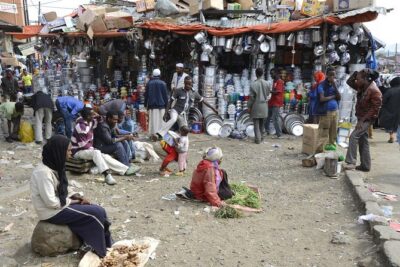
The two-hour visit to Merkato is one of the day’s most memorable parts, but also one of the least predictable. This is a large commercial district rather than a tidy market hall. You will see shops, stalls, goods, people, and traffic spread through a busy part of the city.
Merkato’s modern story is tied to the Italian occupation of the 1930s. Before then, an open market operated near St. George Church, where City Hall now stands. The occupying government moved the market west and created a divided commercial system. European-style shops were concentrated in Piazza, while the larger market served other communities.
That background helps explain why Merkato feels like more than a place to buy things. It reflects Addis Ababa’s changing politics, trade networks, and urban growth. Your guide is particularly useful here, helping you understand what you are seeing and keeping the visit focused.
Two hours may sound long, but the district is large. You may spend part of the time walking and part of it in the vehicle, depending on traffic and the day’s exact plan. Keep valuables secure, stay near the guide, and wear practical shoes. This is not the place for a relaxed, empty-handed stroll.
St. George’s Cathedral and its royal displays
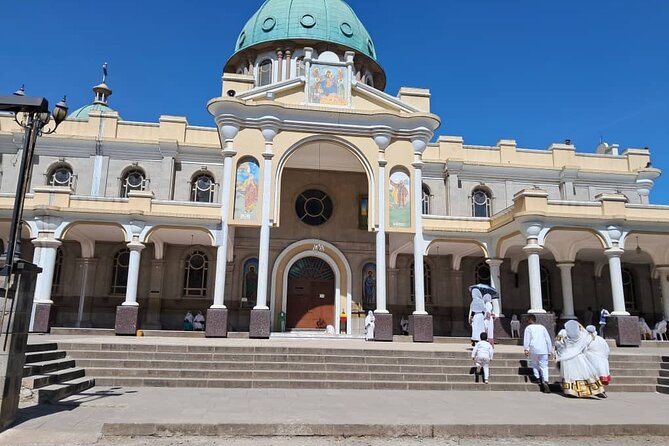
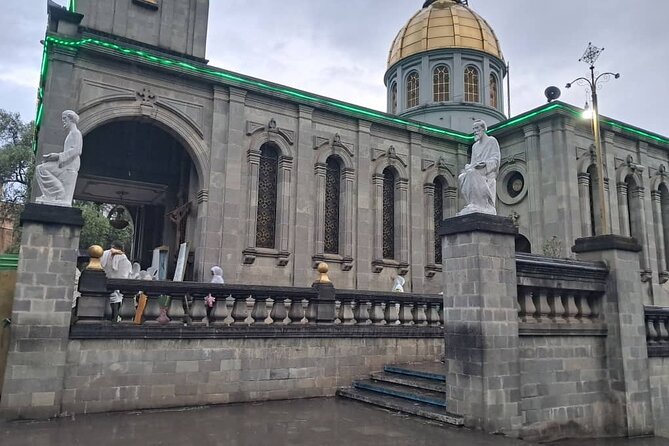
St. George’s Cathedral sits at the northern end of Churchill Road. Its unusual octagonal shape makes it easy to recognize, but the building’s story is the real reason to visit.
It was designed by Sebastiano Castagna and built by Italian prisoners of war captured after the Ethiopian victory at Adwa in 1896. The cathedral was named for St. George because his image and the church’s ark were associated with the Ethiopian forces at that battle.
The building was set on fire by Italian Fascist authorities in 1937 and restored after Ethiopia’s liberation in 1941. That sequence gives the cathedral a direct connection to the country’s struggle with Italian aggression.
Allow about an hour. The attached museum displays an imperial throne and weapons used in conflicts with Italy, including curved swords, tridents, and large helmets made with lion manes. These objects can be striking, though the museum is compact. Dress respectfully and follow any photography rules in force during your visit.
Meskel Square and the public life of Addis Ababa
Meskel Square is included as a city sight rather than a timed museum visit. It is a major public space used for demonstrations, festivals, and large gatherings.
The square takes its name from Meskel, the Ethiopian Orthodox celebration of the finding of the True Cross. It was once called Stephen Square before being renamed in the early 1950s. The site has also been associated with imperial celebrations, including the Meskel Festival under Emperor Haile Selassie.
Your time here may be brief, depending on traffic and the guide’s plan. Think of it as a chance to understand the scale of Addis Ababa’s civic life, not as a formal attraction with a long interior visit. The square works well as a link between the historical sites and the city you see from the road.
The Red Terror Martyrs Memorial Museum
This is the shortest museum stop, at about 30 minutes, but it may be the most emotionally demanding. The memorial museum was established in 2010 to remember those killed during the Red Terror under the Derg government.
Displays include torture instruments, skulls and bones, coffins, bloodstained clothing, and photographs of victims. The material is direct and upsetting. You should not treat this as a casual sightseeing stop, and you may want to ask your guide how much time is planned before entering.
The museum’s free tours explain the political events that led to the Red Terror, the treatment of prisoners, and the ways detainees communicated secretly. Even a short visit adds essential context to Ethiopia’s modern political story. It also changes the mood of the day, so the later trip up Mount Entoto provides a useful pause.
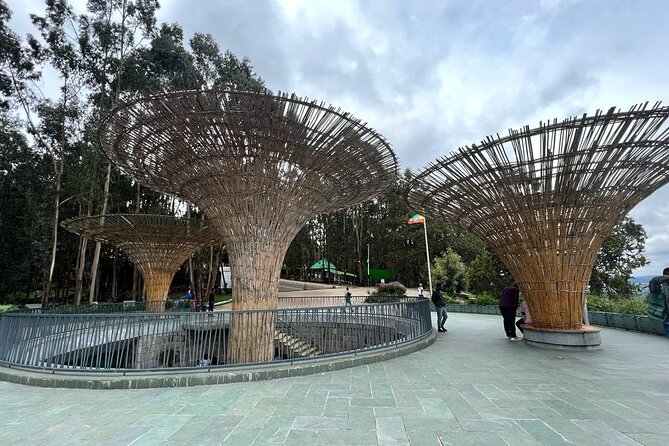
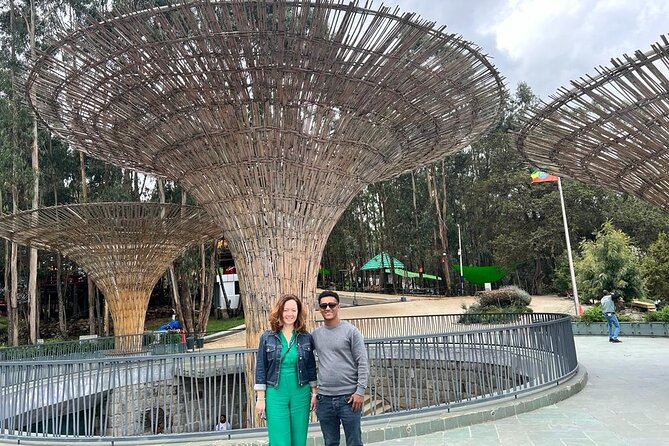
Mount Entoto, eucalyptus, churches, and city views
The final major stop is Mount Entoto, about an hour from the city’s lower districts. The mountain is linked to Emperor Menelik II, who lived there and built his palace before Addis Ababa developed into the capital it is today.
Entoto is regarded as a sacred mountain and includes monasteries and churches such as St. Raguel and St. Mary. Its eucalyptus forest is another important part of the experience. The trees were imported from Australia during Menelik II’s reign and planted in larger numbers during Haile Selassie’s time. The forest later became an important source of firewood and building material for the city.
The higher elevation brings a different feel from the markets below. You get open views over Addis Ababa and a chance to breathe cooler air among the trees. The exact viewpoint and time outside can vary, so do not assume this is a long mountain walk. The tour is mainly a sightseeing stop by vehicle, with time to take in the setting.
Bring a light layer. Addis Ababa’s elevation already gives it a cooler climate than many visitors expect, and Mount Entoto can feel cooler still. The road trip also gives you a useful look at how quickly the city rises from its central streets into wooded high ground.
Food, coffee, and what is actually included
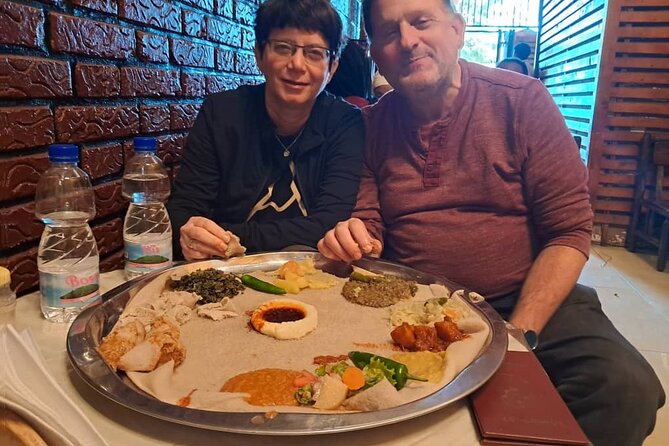
The experience is described as a chance to enjoy Ethiopian coffee and traditional food, but food and drinks are not included in the price. Alcoholic drinks are also excluded.
That distinction matters when you compare the $600 cost with other day tours. You should budget separately for anything you buy during the day. The itinerary does not specify a fixed restaurant, tasting menu, or coffee ceremony, so ask the operator exactly what food or coffee stop is planned if that part matters to you.
A food-focused outing may be available as an expanded version. One account describes combining the city tour with a food tour and spending nearly nine hours on the day. Do not assume that extra food portion is part of this standard booking unless it is confirmed in writing.
Is $600 per person good value?
At $600 per person, this is expensive for a city tour. The value depends heavily on your circumstances.
For a solo visitor on a long layover, the price buys convenience: airport pickup, a private or small-group vehicle, a driver-guide, several admission fees, and a return transfer. You avoid trying to connect distant museums and markets by yourself in unfamiliar traffic. Several outings have also been adjusted to fit a short stopover, sometimes completing the main sights in under six hours.
For two people, the cost is easier to justify if the service is effectively private. For a group of several people, ask how the price changes, since the maximum group size is 10. You should also confirm whether the quoted price is truly per person in your booking rather than a vehicle rate.
The included items are:
- Air-conditioned minivan transport
- Driver-guide service
- Blue Badge guide
- Hotel pickup and drop-off
- Entrance fees
- Taxes, fees, and handling charges
Airport or departure tax, food, drinks, and alcohol are not included. The strongest value is time saved and local guidance, not low cost.
Who will get the most from this tour?
I would consider this tour if you have one free day, a long layover, or limited confidence navigating Addis Ababa independently. It works especially well for first-time visitors who want a broad introduction rather than one specialist theme.
It also suits families and solo visitors who value a guide’s company. Guides such as Mickey have been described as attentive and good at adjusting the pace, while Mulate has led shorter versions that covered two museums, the cathedral, Entoto, markets, and a restaurant in less than six hours. The exact guide is not guaranteed, so request a preferred language or guide when booking, but treat that request as subject to availability.
You may not like it if you prefer long museum visits, unhurried market wandering, or a carefully paced walking tour. The schedule is full, and traffic can eat into time at the stops. History lovers may want more time at the National Museum and Red Terror museum than this route allows.
Free cancellation is available if you cancel at least 24 hours before the start time. Changes or cancellations inside that window are not refundable, and the tour requires a minimum number of participants. If the minimum is not met, you should be offered another date or a full refund.
Should you book it?
Book this Addis Ababa tour if you want to see the city’s main cultural and historical sights in one organized day, especially during a layover. The combination of Lucy, Merkato, St. George’s Cathedral, the Red Terror memorial, and Mount Entoto gives you a useful sense of Ethiopia’s past and present.
I would first confirm three things: the exact pickup point, whether the National Museum is open, and what food or coffee is actually planned. At $600 per person, those details matter. If the price fits your budget and your time is tight, the convenience can justify it. If you have several days in Addis Ababa, you may get better value by splitting the museums and markets into slower, less expensive outings.
FAQ
How long does the Addis Ababa city tour last?
The planned duration is about seven to eight hours. Some outings have lasted closer to nine hours, while shorter versions have covered the main sights in less than six hours.
Is airport pickup available?
The tour information offers pickup from a hotel or the airport. The stated meeting point is Edna Mall on Cameroon Street, so confirm your exact pickup and drop-off arrangements before the tour.
What is included in the $600 price?
The price includes air-conditioned minivan transport, a driver-guide, a Blue Badge guide, hotel pickup and drop-off, entrance fees, taxes, and handling charges.
Are food and Ethiopian coffee included?
No. Food, drinks, and alcoholic drinks are not included. You can purchase them separately, and you should confirm whether a planned coffee or food stop is part of your specific booking.
What is the maximum group size?
The activity accepts a maximum of 10 participants. Some bookings may operate as private tours, but you should confirm the arrangement for your date.
Can I cancel for a full refund?
Yes, if you cancel at least 24 hours before the scheduled start time. Cancellations or changes made less than 24 hours in advance are not refunded. If the minimum group size is not reached, you should be offered another date or a full refund.
Just added around Addis Ababa
- Best of Addis Privet Guided city Tour★ 5.0 · 6 reviews
- Debre Libanos Monastery & Scenic Portuguese Bridge Tour★ 5.0 · 4 reviews
- Day trip Adadi Mariam, Melka Kunture and Tiya stele★ 3.1 · 5 reviews
- Addis Ababa: Entoto hill and Mercato Market layover tour★ 5.0 · 5 reviews
- Addis Night Life yod Abissinia★ 3.8 · 4 reviews
- A perfect day trip to Lake wenchi from Addis Ababa★ 5.0 · 3 reviews
- Addis Ababa city tour from Bole airport and All Hotels★ 4.0 · 3 reviews
- Addis Ababa Essentials: Flexible Full-Day City Sightseeing★ 5.0 · 3 reviews
City Tours, compared.
Addis Ababa Guided City Tour With Airport & Hotel Pick Up
Read our review →
Authentic Addis Ababa City Tour with a Local Guide
Read our review →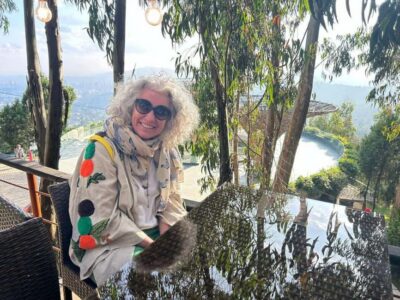
Addis Ababa City Tours Full Day With Hotel Pickup And Drop Off.
Read our review →Browse the lists this tour appears in