

Reviewed · HISTORICAL TOURS
3-Day Cultural Tour in South Omo Valley
The main draw here is the chance to meet several distinct communities in only three days. You move from Hamer villages near Turmi to Dassanech country at Omorate, then cross Mago National Park to reach a Mursi village. The cultural range is remarkable, especially for a short trip.
I like the small maximum of six people, which should make village visits easier to manage, and I like that the package includes domestic flights, a vehicle, lodging, breakfast, entrance fees, and an English-speaking guide. The possible drawback is the pace: long road transfers and a short schedule leave little room for delays or a second chance at a ceremony.
Key points
- Four cultural encounters: The route includes Bana, Hamer, Dassanech, and Mursi communities, each with its own language, dress, customs, and daily life.
- Bull jumping is not guaranteed: A Hamer marriage ceremony may happen during your visit, but local timing controls the schedule.
- A small group matters: The tour accepts no more than six people, a useful limit for village visits and long drives.
- The Omo River crossing is part of the story: At Omorate, you cross the river in a dugout canoe to reach Dassanech communities.
- Flights save valuable time: You fly from Addis Ababa to Jinka instead of spending the entire first day on the road.
- Budget for two meals daily: Breakfast is included, but lunch, dinner, and tips are extra.
Why South Omo feels different from a standard Ethiopia tour

South Omo is not a quick sightseeing circuit. The region is home to eight ethnic communities, with a combined population of about 200,000, and the appeal comes from seeing how varied life can be within one corner of Ethiopia.
The Hamer, Dassanech, Bana, and Mursi communities follow different customs and speak different languages. Clothing, beadwork, farming, livestock, body decoration, and ceremonies all change as you move between areas. That variety gives this tour its real value.
You should also set your expectations carefully. This is a visit to living communities, not a staged museum program. The quality of the day depends on local conditions, road travel, community access, and whether a ceremony happens to be scheduled. Go with curiosity, patience, and respect.
The tour company describes its approach as local-led, with routes shaped around less-visited parts of the Omo region. That matters because the best moments here are not simply photo stops. You are looking at homes, people, work, adornment, and traditions that remain part of everyday life.
More historical sites near Addis Ababa:
- Day Trip From Addis Ababa See Historical Monastery,Stunning Nature,Animals,Birds
★ 5.0 · 303 reviews - Hidden Treasures of Addis Ababa – Food, Culture and History Tour
★ 5.0 · 57 reviews - DAY TRIP TO THE UNESCO HERITAGE SITE TIYA & Melka Kunture
★ 4.5 · 10 reviews
Day 1: Flying to Jinka and meeting the Hamer near Turmi
Your day begins at Bole Addis Ababa International Airport, with a listed start time of 9:00 a.m. You fly to Jinka, then continue by air-conditioned vehicle toward Turmi, an area associated with the Hamer people. A stop in a Bana village is also planned along the way.
The flight is a smart use of limited time. South Omo is far from Addis Ababa, and replacing a long initial road journey with a flight gives you more time in the region itself. Still, the first day remains active, with roughly six hours assigned to the route and visits.
The Hamer are known for colorful beadwork and body adornment. Women may wear heavy polished iron jewelry around the neck, along with beads and other decorations. These details are not just costume for an audience. They reflect identity, status, beauty, and tradition.
The Hamer are also associated with a bull-jumping ceremony connected to marriage. Men traditionally jump over a line of cattle, while other parts of the event involve music, dance, and community participation. The timing is unpredictable, so you should not book this tour solely on the promise of seeing bull jumping.
The description also refers to ritual flogging among Hamer women, with scars viewed by the women involved as signs of devotion. This is a sensitive subject. If it comes up during a visit, watch quietly and let your guide explain the context rather than treating the ceremony as entertainment.
The Bana stop gives the first day more range. Instead of focusing on only one community, you begin to see how quickly clothing, decoration, and village life can change in South Omo.
Turmi and the chance of a Hamer marriage ceremony
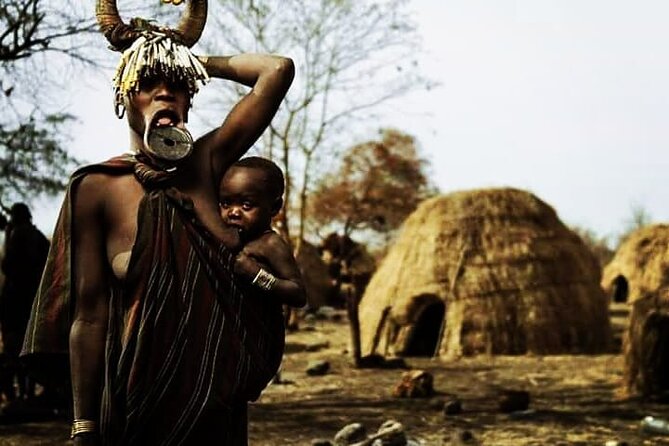
Turmi is one of the most important bases on this route because it is linked to Hamer communities and traditional events. If a marriage ceremony is taking place, the schedule may change to make room for it. That is a good trade.
A planned stop is useful, but a real ceremony can be the defining moment of the trip. The important point is that the event must belong to the community, not to the tour timetable. The guide’s role is to help you understand what is happening and how to behave appropriately.
Ask before taking close-up photographs. The supplied tour details do not spell out a photography policy, so you should rely on the guide and local permission. A respectful approach will serve you better than trying to collect as many portraits as possible.
The road portions can be tiring. Even with an air-conditioned vehicle, the combination of heat, distance, and changing road conditions can make the day feel longer than the schedule suggests. Keep water with you and avoid packing the first day too tightly with other plans.
Day 2: Crossing the Omo River to Dassanech country
Day two is the longest day, with about eight hours assigned to the excursion and the drive onward to Jinka. You travel about 70 kilometers each way to Omorate, an important point for meeting Dassanech communities.
The Dassanech are associated with a nomadic way of life and distinctive body decoration and scarification. As with the Hamer, you are seeing traditions that connect to family, place, age, and identity. Your guide can help separate what is a daily practice from what may be part of a particular ceremony or presentation.
The Omo River crossing is one of the most memorable details of the route. You use a dugout canoe to cross the river, with views over the water as you approach the Dassanech side. This is not simply a transport detail. The river helps explain the region’s geography and why communities on opposite banks can have such different ways of life.
The canoe crossing may feel basic compared with a standard sightseeing transfer, but that is part of its appeal. You should expect a practical local crossing, not a polished cruise. Listen to your guide and follow local instructions around the boat.
The long drive to Omorate and back is the main cost of this day in energy. I would choose this excursion because it adds a community and setting that you cannot duplicate near Turmi, but you need to be comfortable with a full day on the move.
In the afternoon, the guide may try to fit in another Hamer visit or local event. If a bull-jumping ceremony is taking place, that excursion may be canceled so you can attend the ceremony instead. That flexibility is sensible, since the ceremony is likely to be more meaningful than repeating a standard village stop.
Late in the day, you drive to Jinka for the night. Because the schedule is tight, do not count on a long evening there. The town mainly serves as an overnight base before the Mursi visit and the return journey.
More three-day trips from Addis Ababa:
- 3 Days Danakil Depression Tour
★ 4.5 · 135 reviews - 3 Days Danakil Depression Tours Via Semera
★ 5.0 · 47 reviews - 3 Day Danakil Depression Ertale and Dallol Tours
★ 5.0 · 44 reviews - 3 Days Dankile Depression group Tours
★ 5.0 · 40 reviews
Day 3: Mago National Park and a Mursi village
The final morning takes you through Mago National Park to a Mursi village. The drive and visit are listed at about four hours, making this the shortest scheduled touring period of the three days.
The Mursi are widely known for lower-lip and earlobe plates. These forms of body modification are often the first thing people associate with the community, but they should not become the only thing you see. Pay attention to clothing, household life, livestock, craftwork, and the setting around the village.
A good guide can add essential context here. Without explanation, it is easy to reduce a complex culture to a single striking visual detail. With care, you can understand the plates as part of a broader system of beauty, identity, and tradition.
The route through Mago National Park also gives the trip a natural setting between cultural visits. The supplied details do not promise wildlife sightings, so do not book this as a safari. The park is important mainly because it forms part of the road to the Mursi area.
After the Mursi visit, you return to Jinka and fly back to Addis Ababa, with the tour ending at Bole Addis Ababa International Airport. The exact return timing is not stated, so avoid scheduling a tight onward connection unless the operator confirms the flight details.
What the $700 price includes, and what it does not
At $700 per person, this is not a low-cost independent trip. The price makes more sense when you consider the distance, domestic flight, private road transport, guide, lodging, and national park or other entrance fees included in the package.
You receive:
- Air-conditioned vehicle transport
- Domestic flight travel between Addis Ababa and Jinka
- Accommodation with breakfast
- An English-speaking guide
- All listed fees and taxes
- Pickup and return at Bole Addis Ababa International Airport
Lunch and dinner are not included, and tips are also extra. You should set aside additional money for both meals each day, plus any gratuity you choose to give the guide and driver.
The value depends on what you want from South Omo. If you want several communities in a short period, with flights and transport arranged, the price is easier to justify. If you prefer slow travel, local buses, or a longer stay in each place, you may find a three-day package too compressed.
The group limit of six improves the value. A large coach would be a poor fit for village visits and long rural roads. A small party also gives you a better chance to ask questions and discuss cultural details with the guide.
The guide and driver can shape the whole trip

The supplied feedback names Tariku as a guide and Sitotaw as a driver, and describes the pair as attentive and responsible. Ask when booking if they will be your team, since staff assignments can change.
That personal care matters in South Omo. You need someone who can explain customs without turning people into a spectacle, manage changes when ceremonies appear, and keep the long transfers moving. The driver matters just as much because much of the tour takes place between communities rather than at a single site.
The company has also been praised for arranging transport, accommodation, and meals smoothly on past departures. Since your package specifically excludes lunch and dinner, confirm exactly what is covered before you pay for extras. Clear communication is especially useful when the schedule changes around a ceremony.
Who should book this three-day route?
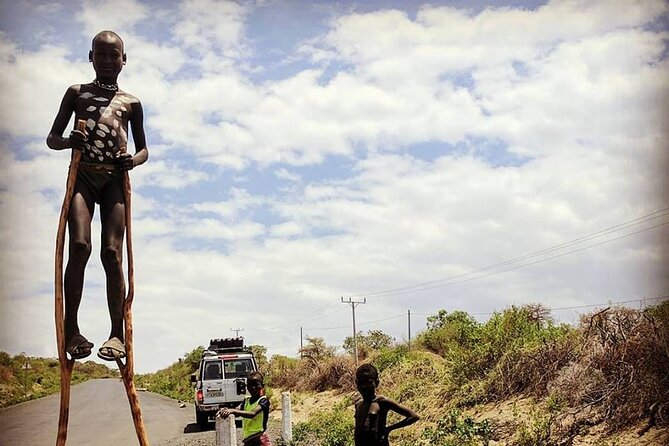
I would recommend this tour to someone visiting Ethiopia for the first time who wants a focused introduction to South Omo without arranging flights, drivers, lodging, and community visits alone.
It also suits you if you value cultural variety more than a relaxed pace. In three days, you may see Bana, Hamer, Dassanech, and Mursi communities, plus Mago National Park and the Omo River crossing. That is a lot of ground.
You may not enjoy it if you dislike long drives, early starts, uncertain event timing, or basic rural transport. The itinerary is active, and the possibility of a ceremony means you must accept changes rather than expect every hour to run exactly as printed.
The tour is also best for people willing to approach cultural visits with respect. Ask before taking photographs, listen to explanations, and remember that the people you meet are not performers hired for a show.
Booking details worth checking before you go
Pickup and drop-off are offered at Bole Addis Ababa International Airport. The listed start time is 9:00 a.m., and the group maximum is six people. Confirmation is issued when you book, and the activity states that most people can participate.
The tour requires good weather and a minimum number of participants. If poor weather or insufficient enrollment causes cancellation, you can choose another date or receive a full refund.
You can cancel for a full refund up to 24 hours before the local start time. Cancellations or changes made inside that 24-hour window are not refunded or accepted.
I would confirm the domestic flight times, hotel names, meal arrangements, photography expectations, and the exact guide team before departure. Those details will help you judge how the $700 package fits your plans.
Should you book the South Omo tour?
Book it if your priority is seeing several South Omo cultures in a short, organized trip. The Hamer, Dassanech, Bana, and Mursi visits give the route real variety, while the Omo River crossing and Mago National Park add a sense of place. The small group and included flight are strong advantages.
Think twice if you want an unhurried stay or a guaranteed bull-jumping ceremony. No schedule can promise that event, and the long distances make this a fast introduction rather than a slow study of one community.
For the right person, this is a practical way to reach a remote part of Ethiopia with a guide, vehicle, lodging, and key fees arranged. Just bring patience, budget for extra meals and tips, and let local conditions shape the day.
FAQ
Where does the tour start and finish?
It starts and ends at Bole Addis Ababa International Airport in Addis Ababa, Ethiopia.
What time does the tour start?
The listed start time is 9:00 a.m.
How long is the tour?
The tour lasts approximately three days.
How many people can join?
The activity has a maximum group size of six people.
Is pickup available?
Yes. Pickup is offered, with the stated meeting point at Bole Addis Ababa International Airport.
Is the flight from Addis Ababa included?
The route includes a flight from Addis Ababa to Jinka on the first day and a return flight to Addis Ababa at the end. Air travel is included in the arranged tour service.
Which communities are included?
The route includes visits connected with the Bana, Hamer, Dassanech, and Mursi communities.
Is bull jumping guaranteed?
No. A Hamer bull-jumping ceremony may take place if the timing is right, but it is not guaranteed. A planned excursion may be changed if a ceremony is happening.
What is included in the price?
The package includes an air-conditioned vehicle, all fees and taxes, accommodation with breakfast, and an English-speaking guide.
Are meals and tips included?
Lunch, dinner, and tips are not included.
Can I cancel for a full refund?
Yes, if you cancel at least 24 hours before the experience begins. Cancellations made less than 24 hours before the start time are not refunded.
What happens if weather or group numbers cancel the tour?
If poor weather or failure to meet the minimum number of participants causes cancellation, you are offered another date or experience, or a full refund.
Just added around Addis Ababa
- A day trip to Wench crater Lake★ 5.0 · 4 reviews
- Day Trip to Tiya UNESCO Site & Melka Kunture Archaeological Site★ 4.5 · 3 reviews
- Perfect Escape from Busy Addis Ababa: Debre Libanos & Blue Nile Gorge excursions★ 5.0 · 6 reviews
- Local Ethiopian Food Tour★ 4.0 · 4 reviews
- Addis Ababa City Tour★ 4.5 · 3 reviews
- Local Ethiopian Food Tour★ 4.0 · 7 reviews
- Half day Addis Ababa Authentic city tour★ 5.0 · 5 reviews
- Airport Layover Tour | Half Day Addis City Tour : sightseeing, museum , markets★ 5.0 · 4 reviews
Historical Tours, compared.
Day Trip From Addis Ababa See Historical Monastery,Stunning Nature,Animals,Birds
Read our review →
Hidden Treasures of Addis Ababa – Food, Culture and History Tour
Read our review →
5 Days Tour to World Heritage–listed Harrar, Dire Dawa and Awash NATIONAL PARK
Read our review →
DAY TRIP TO THE UNESCO HERITAGE SITE TIYA & Melka Kunture
Read our review →
Experience a Cultural and Historical Journey through Addis Ababa
Read our review →
Historical tours – in five days, Addis Ababa, Axum, Laliebla and Gonder
Read our review →
city tour of Addis Ababa ( history ,culture , food and more)
Read our review →Browse the lists this tour appears in