

Reviewed · HISTORICAL TOURS
Experience a Cultural and Historical Journey through Addis Ababa
Addis Ababa reveals itself best through contrasts: a 3.5-million-year-old human ancestor, a cathedral holding an emperor’s tomb, a high eucalyptus-covered mountain, and Mercato’s noisy lanes. This private tour packs those contrasts into one useful day, with guide Eyob often praised for explaining Ethiopia’s past, politics, geography, and daily life in clear terms.
I like the mix of major sights and ordinary city life, especially Mercato and Tomoca Coffee, where you get a feel for Addis beyond formal monuments. I also like the built-in lunch and private vehicle, which make a long morning of sightseeing easier. The drawback is pace: six stops in roughly five to six hours leave limited time at each place, and Mercato may feel rushed.
Key points to know before booking
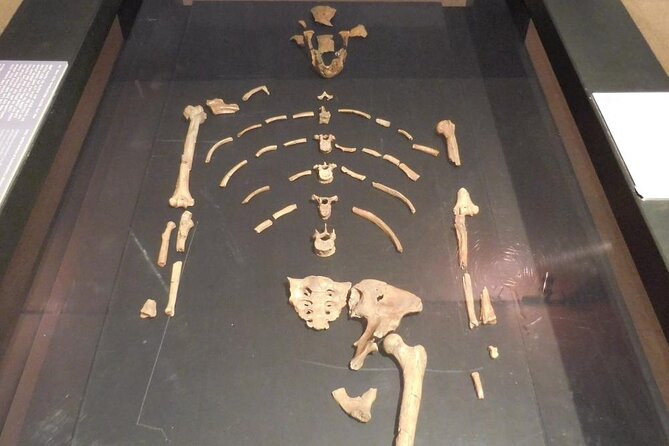
- Lucy is the day’s strongest opening stop, with a fossil that changed how scientists understood early human development.
- Eyob is the named guide, and the tour’s strongest praise centers on his clear explanations and flexible company.
- Mount Entoto gives you the city from above, with eucalyptus trees and a sharp change in altitude.
- Mercato is not a polished shopping center, but a vast open-air market where almost every kind of ordinary commodity is sold.
- Lunch and a coffee ceremony add local flavor, while air-conditioned transport saves time between far-flung stops.
- The private format suits solo visitors and short stays, but the busy schedule may not suit anyone who prefers slow museum visits.
Why this Addis Ababa route works
At $100 per person, this is not the cheapest way to take a quick drive around Addis Ababa. It is a stronger value if you want transport, a private guide, museum and site admission, lunch, coffee or tea, and several major sights handled in one booking.
The real value is the range. In one outing, you move from human evolution to imperial Ethiopia, from a mountain viewpoint to a market, and then into the country’s coffee culture. You do not need to work out separate taxis, entrances, or a restaurant stop.
The tour begins at 8:30 am and lasts about five to six hours. Since the day includes six stops, expect an overview rather than a slow, specialist visit. If you have only one free day in Addis Ababa, that tradeoff makes sense. If you have several days, you may prefer to use this as an introduction and return later to the museum or market on your own.
The private format matters. Only your group takes part, so you can ask questions, adjust the conversation, and ask for practical suggestions after the formal tour ends. One visitor specifically valued the recommendations Eyob gave for the rest of a stay in Ethiopia. That is useful when you are still deciding what to see next.
More historical sites near Addis Ababa:
- Day Trip From Addis Ababa See Historical Monastery,Stunning Nature,Animals,Birds
★ 5.0 · 303 reviews - Hidden Treasures of Addis Ababa – Food, Culture and History Tour
★ 5.0 · 57 reviews - DAY TRIP TO THE UNESCO HERITAGE SITE TIYA & Melka Kunture
★ 4.5 · 10 reviews
Meeting Lucy at the National Museum
The National Museum of Ethiopia is the intellectual anchor of the day. Its best-known object is Lucy, also called Dinkinesh, a fossil of Australopithecus afarensis discovered in 1974.
The fossil is described as about 3.5 million years old. Her discovery helped change the accepted view of human development by showing that an early human ancestor walked upright much earlier than previously thought. You do not need a background in archaeology to appreciate the display. The basic lesson is powerful: the story of human origins has been revised many times, and Ethiopia is central to that story.
The museum also holds artifacts from pre-Aksumite civilization, so the visit is not only about Lucy. Your guide can help connect the archaeological displays to Ethiopia’s wider past, rather than leaving you to move from case to case without context.
You have about an hour here, with admission included. That is enough for the major displays, but not enough for every room. I would pay close attention to the explanations around Lucy and use the remaining time for the artifacts that interest you most.
For anyone visiting Addis Ababa for the first time, this is a smart starting point. It gives you a framework for understanding the country before you see its churches, markets, and political monuments.
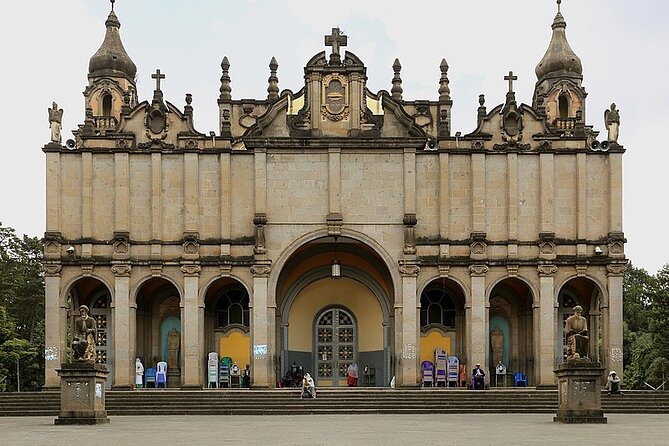
Holy Trinity Cathedral and the imperial tombs

Holy Trinity Cathedral brings the tour into modern Ethiopian religious and political history. It is considered one of the country’s most important churches, and the mausoleum of Emperor Haile Selassie and his wife is inside.
You may also have a chance to attend a religious ceremony. That possibility adds an important human element, but it also means you should act with care. This is a working place of worship, not simply a sightseeing stop. Follow your guide’s direction about where to stand, when to speak, and what parts of the ceremony can be observed.
The visit lasts about an hour, and admission is included. The cathedral is especially worthwhile if you want to understand how religion and the Ethiopian monarchy overlap. Haile Selassie remains one of the country’s best-known historical figures, so seeing the mausoleum gives the tour a direct link to the imperial period.
This stop may feel more restrained than Mercato or the coffee shop. That is part of its value. The day is not built around constant activity. It gives you a quiet place to consider Ethiopia’s religious traditions and recent political past.
Mount Entoto above the capital

The vehicle then climbs Mount Entoto, once the permanent camp of Emperor Menelik II. The change in altitude is noticeable, and the air is marked by the scent of eucalyptus trees covering the hillsides.
The stop lasts about 30 minutes, so think of it as a viewpoint and short break, not a hike. From the top, you get a broad view of Addis Ababa and the surrounding countryside. It is a useful pause after the museum and cathedral, and it helps you understand the city’s position in the highlands.
The guide’s commentary matters here. A view alone can blur into another photo stop, but the story of Menelik II’s camp gives the place historical weight. You can connect the high ground to the growth of the capital and to the city’s changing shape below.
Bring a layer if you are sensitive to cooler air, though the supplied information does not specify temperatures or weather conditions. The main practical point is that the stop involves a drive uphill and a considerable change in altitude. Anyone who dislikes quick altitude changes should keep that in mind.
A few more Addis Ababa trips worth weighing up
- Full Day Tour of Addis Ababa with Hotel Pickup and Drop-off
★ 5.0 · 430 reviews - Taste of Ethiopia
★ 5.0 · 406 reviews - Addis Ababa: Debre Libanos, Blue Nile Gorge, and Cave Tour
★ 4.5 · 256 reviews - Addis Ababa Guided City Tour With Airport & Hotel Pick Up
★ 5.0 · 237 reviews
Lunch before the market

Lunch is included, along with coffee or tea. The schedule places lunch before the Mercato visit, giving you a chance to pause before entering one of Addis Ababa’s most demanding and energetic areas.
The exact menu is not specified, so you should not book this expecting a named dish or a particular restaurant. Still, including lunch is useful. It removes the need to spend part of a short tour choosing where to eat, and it keeps the day moving.
The broader Ethiopian food culture is part of what makes the experience appealing, especially because the tour also includes a coffee ceremony. If you have dietary restrictions, ask about them when booking, since no special arrangements are stated in the tour details.
Mercato, where Addis does business

Mercato receives about 90 minutes, the longest single stop on the route. It is described as Africa’s largest open-air market, with almost every kind of commodity on sale.
That description tells you what to expect: not a tidy row of souvenir stalls, but a large commercial district with many kinds of goods and a great deal of movement. You may find the experience more interesting if you treat it as a look at how Addis shops and trades, rather than as a simple place to buy gifts.
This is where a private guide is particularly helpful. A local escort can help you understand what you are seeing and keep the visit focused. You can also ask for advice before buying anything. The information supplied does not promise specific shopping stops, so the exact route through the market may depend on your interests and the conditions on the day.
Ninety minutes is a useful amount of time, but it can pass quickly. If you want to browse carefully, compare prices, or shop for several items, you may need a separate visit. On this tour, the aim is to experience the market’s scale and character as part of a broader city day.
Wear comfortable shoes and keep your attention on your belongings. That is sensible advice for any large market, without assuming conditions beyond what is provided. Let the guide set the pace, and avoid trying to cover every corner.
Tiglachin Memorial and Ethiopia’s political past

The Tiglachin Memorial is a shorter stop of about 30 minutes. It commemorates Ethiopian and Cuban soldiers involved in the Ogaden War and was built under Mengistu Haile Mariam on Churchill Avenue.
This is a useful counterpoint to the cathedral and museum. It introduces the political and military history of modern Ethiopia, including a period that is less familiar to many first-time visitors. The memorial may not take long to see, but its presence helps show that Addis Ababa’s story is not limited to ancient archaeology and imperial monuments.
Because the stop is brief, your guide’s explanation is likely to be more valuable than a long independent visit. Ask questions if you want to understand the Ogaden War or the political setting in which the memorial was built. The tour does not promise a detailed military lecture, but it does give you a direct place to begin.
Tomoca Coffee and Ethiopia’s coffee tradition
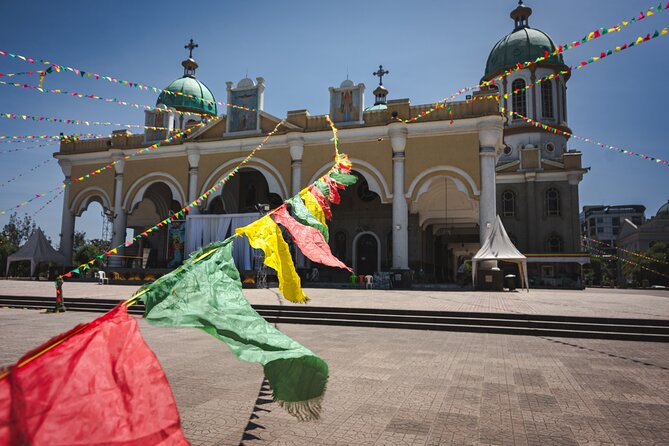
The final stop is Tomoca Coffee, established in 1953 and presented as Ethiopia’s pioneer in roasting highland coffee beans from Kaffa, widely associated with the birthplace of coffee.
You receive a brewed cup and time in a historic coffee shop where locals gather. This is more than a caffeine break. Coffee is one of Ethiopia’s defining cultural exports, and Tomoca gives you a compact way to connect the drink in your cup with the country’s farming and roasting traditions.
The tour also highlights a coffee ceremony. The exact format is not described, so expect the cultural experience to depend on the day and the setting. Still, pairing the ceremony with Tomoca makes sense: one offers tradition and ritual, while the other offers a long-running urban coffee institution.
An optional extension takes you to Leghar Train Station, Addis Ababa’s oldest station. The details do not specify whether this adds time or changes the route, so ask your guide before counting on it. If included, it would add another layer to the day, showing how transport history fits into the city’s development.
What the guide adds
The strongest praise attached to this experience centers on Eyob. He is described as friendly, personable, and able to discuss not only Addis Ababa but also Ethiopia’s history, people, geography, development, and current affairs.
That range is important because this route jumps across several subjects. A guide who can explain the connection between Lucy, Haile Selassie, Menelik II, the Ogaden War, and present-day city life makes the stops feel related rather than random.
The tour also appears flexible. A half-day visitor valued Eyob as a companion and received suggestions for activities after the tour. Another visitor used the day to see museums, historical places, restaurants, and shopping in one outing. You should still treat flexibility as a conversation to have at the start, not as a promise that every stop can be extended.
The guide’s role is especially useful for solo visitors. You get company without joining a large group, and the private setup gives you room to ask direct questions or adjust your interests.
Transport, timing, and who should book
Pickup is offered, and the tour uses an air-conditioned vehicle. That matters in Addis Ababa because the stops are spread across the city and include a drive uphill to Mount Entoto. You spend less energy arranging transport and more time at the sights.
The tour is suitable for most participants, is near public transportation, and uses mobile tickets. Confirmation is provided at booking. The start time is 8:30 am, so plan your morning around an early departure.
I would recommend this for:
- A first visit to Addis Ababa
- A solo visitor with limited time
- Anyone who wants a private guide rather than a large group
- People interested in archaeology, religion, politics, markets, and coffee in one day
- Visitors who want lunch and transport included
I would be more cautious if you prefer to spend half a day in one museum, want a long shopping session, or dislike a tight schedule. The route is broad by design.
Alcoholic drinks are not included. Free cancellation is available if you cancel at least 24 hours before the start time. Cancellations inside that window are not refundable, and changes made within 24 hours are not accepted.
Should you book this Addis Ababa tour?
Book it if you want a well-rounded first look at the capital and value having Eyob or another professional guide connect the stops for you. The combination of Lucy, Holy Trinity Cathedral, Mount Entoto, Mercato, Tiglachin Memorial, lunch, and Tomoca Coffee gives you a useful picture of Addis Ababa in a single private outing.
At $100 per person, the price makes the most sense when you use the included transport, admissions, meal, coffee, and guide as one package. It is less compelling for visitors who already know the city or want a slow, highly specialized cultural visit.
My practical advice is to book this early in your Addis Ababa stay. Use it to get oriented, ask for suggestions for your remaining time, and return later to the places that deserve longer. For a first-day introduction with real variety, this is a sensible choice.
FAQ
How long does the Addis Ababa tour last?
The tour lasts approximately five to six hours.
What time does the tour begin?
The scheduled start time is 8:30 am.
Is pickup available?
Yes, pickup is offered.
Is this a private tour?
Yes. Only your group participates in the activity.
Is lunch included?
Yes, lunch is included in the tour price.
Are coffee and tea included?
Yes, coffee and/or tea are included. The tour also includes a visit to Tomoca Coffee and highlights a coffee ceremony.
Is admission included at the attractions?
Yes, all fees and taxes are included, and admission is listed as included for the National Museum, Holy Trinity Cathedral, Mount Entoto, Mercato, and Tiglachin Memorial.
What is the cancellation policy?
You can cancel at least 24 hours before the start time for a full refund. Cancellations or changes made less than 24 hours before the start time are not accepted, and the amount paid is not refunded.
Just added around Addis Ababa
- Best of Addis Privet Guided city Tour★ 5.0 · 6 reviews
- Debre Libanos Monastery & Scenic Portuguese Bridge Tour★ 5.0 · 4 reviews
- Addis Night Life yod Abissinia★ 3.8 · 4 reviews
- Day trip Adadi Mariam, Melka Kunture and Tiya stele★ 3.1 · 5 reviews
- Addis Ababa: Entoto hill and Mercato Market layover tour★ 5.0 · 5 reviews
- A perfect day trip to Lake wenchi from Addis Ababa★ 5.0 · 3 reviews
- Addis Ababa city tour from Bole airport and All Hotels★ 4.0 · 3 reviews
- Addis Ababa Essentials: Flexible Full-Day City Sightseeing★ 5.0 · 3 reviews
Historical Tours, compared.

Day Trip From Addis Ababa See Historical Monastery,Stunning Nature,Animals,Birds
Read our review →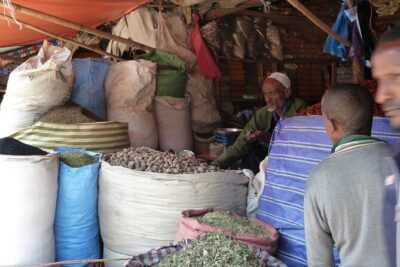
Hidden Treasures of Addis Ababa – Food, Culture and History Tour
Read our review →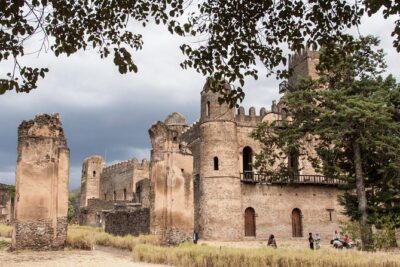
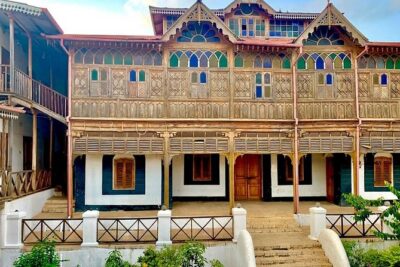
5 Days Tour to World Heritage–listed Harrar, Dire Dawa and Awash NATIONAL PARK
Read our review →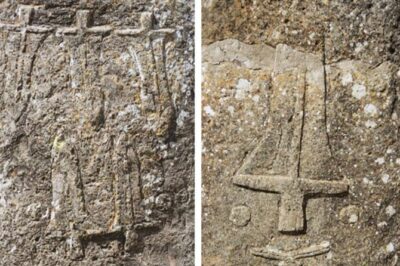
DAY TRIP TO THE UNESCO HERITAGE SITE TIYA & Melka Kunture
Read our review →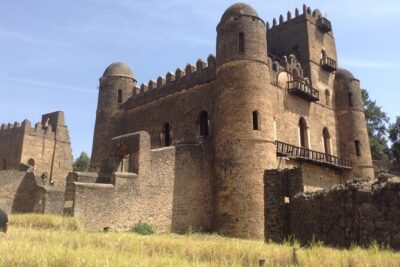
Historical tours – in five days, Addis Ababa, Axum, Laliebla and Gonder
Read our review →
5 days Exploring North Ethiopia’s Rich History and Culture
Read our review →Browse the lists this tour appears in