
Reviewed · 3-DAY TOURS IN THE DANAKIL
3 Day Guided Tour Throughout Danakil Depression in a Small Group
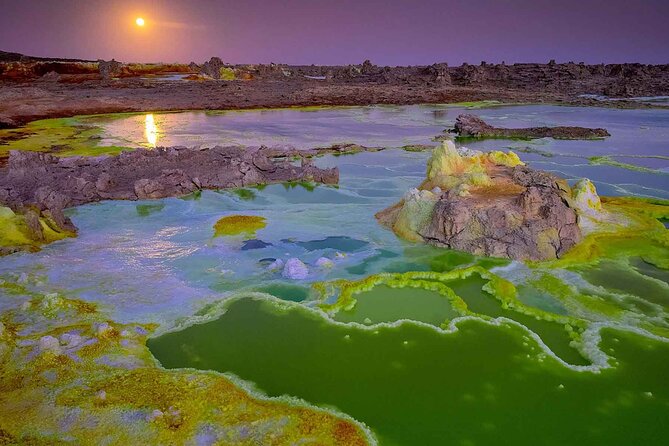
The most startling part of this trip is Erta Ale, where you trek from Dodom to a volcano rim and spend the night watching molten lava below. The Danakil Depression then gives you a second kind of drama at Dallol, with sulfur colors, salt flats, acidic springs, and mineral-stained ground that looks almost unreal.
I like the small maximum of six people, which should make the long drives and rough stops easier to manage. I also like that the price includes a vehicle, food, water, camping gear, camel transport, and an Afar guide, so you are not assembling the hard parts yourself. The drawback is clear: this is a hot, basic, physically demanding trip, with long drives, an overnight camp, and limited comfort.
Key points to know before you book
- Erta Ale after dark: Trek about 9.5 kilometers from Dodom to the volcano rim, then watch the lava glow through the night.
- Dallol’s strange chemistry: See sulfur and potash colors, volcanic formations, salt canyons, and the shallow Lake Assale.
- Afar salt work: Watch local workers cut salt into rectangular pieces and load it onto camels.
- Open-air camping: Camels carry mattresses, mats, water, food, and other camping equipment to the volcano rim.
- Small-group format: The tour accepts no more than six people, useful during long desert drives and guided walks.
- A demanding schedule: Expect an early start, several hours in a vehicle, heat, rough ground, and only simple sleeping arrangements.
Why the Danakil Depression is worth the hardship
The Danakil Depression is not a soft, easy destination. It is one of the hottest and most severe desert regions in Africa, marked by salt, volcanoes, mineral colors, and broad empty stretches. You come here for raw geology rather than polished sightseeing.
That makes this tour unusual. In three days, you see both the underground force of Erta Ale and the surface chemistry of Dallol. One night is about fire and darkness. The next day is about white salt, yellow sulfur, greenish mineral stains, camel trains, and the work of cutting salt from the ground.
I like that the experience also connects natural wonders with daily life in the Afar region. The salt flats are not simply scenery. Local people break the salt into blocks, load it onto camels, and move it across the desert. You get a better sense of the region when you see the work behind the famous views.
Still, you should not confuse this with a relaxed sightseeing holiday. The vehicle covers rough desert routes, the heat can be punishing, and the sleeping setup is basic. The tour asks you to accept discomfort in return for access to places that are difficult to reach alone.
More 3-Day Tours in the Danakil
- 3 Days Danakil Depression Tour
★ 4.5 · 135 reviews - 3 Days Danakil Depression Tours Via Semera
★ 5.0 · 47 reviews - 3 Day Danakil Depression Ertale and Dallol Tours
★ 5.0 · 44 reviews
Day 1: From Semera to Lake Afdera and Dodom
Your meeting point is Sultan Alimirah Hanfare Airport in Semera. The schedule lists a midnight start, while the day description also refers to an early drive, so confirm the exact pickup time before you arrive. This matters in Semera, where a small change in timing can affect the whole day.
From Semera, you drive toward Lake Afdera, a salt lake in the center of the Danakil Depression. The lake offers a change from the dry desert around it, and you may have a chance to use natural hot springs and swim. I would treat that as a possible extra rather than the main reason to book the trip, since the wording allows for conditions and timing to affect it.
The first driving section takes about five hours. That is a useful reality check. You will spend a large part of the day in the vehicle before reaching the volcano area, so bring patience, sun protection, and something to occupy you between stops. The air-conditioned vehicle is especially valuable here, even though the heat outside remains the defining feature of the region.
After Lake Afdera, the route continues to Dodom, the starting point for the walk to Erta Ale. Lunch is followed by a departure that may be around 1:30 in the afternoon. The timing is set to bring you to the volcano area in the evening, when the glow of the lava becomes easier to see.
Day 1 evening: The 9.5-kilometer walk to Erta Ale
Dodom sits about 9.5 kilometers from Erta Ale. The stated walking time is about one hour, though the tour also describes the stop as a trek, so the exact pace will depend on the group, the heat, and the ground underfoot. You should have a moderate level of fitness and be comfortable walking in a hot, volcanic setting.
Small hamlets appear along the route, giving you occasional signs of life in an otherwise severe desert. The setting is stark, but it is not empty. You may see how scattered communities fit into a place that seems hostile at first glance.
Dinner is scheduled for around 5:00 p.m. Camels carry the camping equipment and some food from Dodom to the volcano rim. That includes light mattresses, mats, and water. This is an important part of the trip’s value: you are not expected to carry the full camp yourself, but you are still sleeping in a very basic outdoor setup.
At the rim, the main event is the volcano. You watch the boiling lava from close range, with the darkness making the red glow more visible. Conditions at an active volcano can change, and the experience is not presented as a controlled viewing platform. Stay close to your guide and follow all instructions around the rim.
The overnight camp is one of the tour’s strongest features and one of its clearest challenges. Sleeping under the open sky beside Erta Ale is memorable, but it is not comfortable in the usual hotel sense. If you need a private room, a firm bed, and regular facilities, this trip is the wrong match.
Day 2: Salt, camels, and the colors of Dallol
Day two begins early, with a planned drive to Hamad Ela at about 4:30 a.m. Hamad Ela is described as a larger village in this remote area, with a population of roughly 500 people. The early departure is not just a scheduling nuisance. It helps you reach the salt areas before the day becomes even hotter.
The route includes Lake Assale, a very shallow salt lake. The day’s descriptions refer to sunrise or sunset views here, so the exact light may depend on the final timing and local conditions. Either way, the lake is a major visual stop, with a broad, pale surface that makes the scale of the depression easy to grasp.
At Ragad, also called Asebo, you see salt mining done by hand. The Afar salt fields cover about 1,200 square kilometers of the depression. Local workers cut salt from the ground into rectangular pieces, then load the blocks onto camels.
This is the sort of stop that gives the tour substance. You are not just looking at a strange natural setting. You are seeing an old economic activity carried out with tools, effort, and animal transport in a place where roads and services are limited. Be respectful with cameras, and listen to your guide about when and where photography is appropriate.
The camel caravans are another highlight. They move through the salt country in a way that fits the region’s history and present-day work. The tour includes camel support in the Afar region, but your main role is to watch the process and follow the route, not to treat the activity as a staged show.
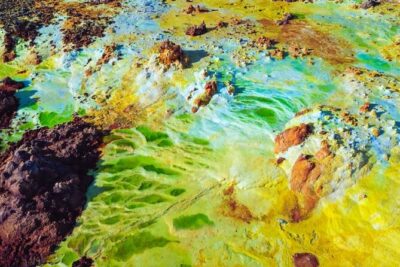
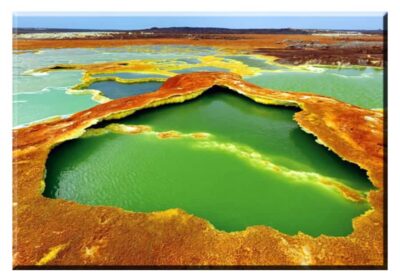
Dallol comes later. Its volcanic activity has formed striking ground colors and unusual shapes. Sulfur and potash produce bright mineral tones, while salt canyons and acidic springs add to the sense that the earth is still busy beneath your feet.
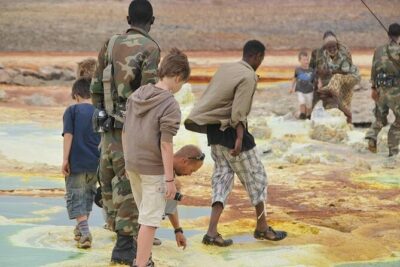
I would keep your expectations realistic. Dallol is not a landscaped park with railings and polished paths. You are walking in a harsh volcanic area, and the ground may be rough or unstable. Stay with the local guide, avoid touching unknown fluids or mineral deposits, and do not wander off for a better photograph.
The day includes Dallol, Lake Assale, the salt canyon, camel caravans, and the salt-cutting area. It is a packed program, and six hours is only an approximate touring time before and after the drives. The result is rewarding, but you may feel tired by the evening.
More three-day trips from Ethiopia:
- 3 Days Dankile Depression group Tours
★ 5.0 · 40 reviews - 2-Night 3-Day Danakil Depression Tour without Flights
★ 4.8 · 31 reviews - Trekking at Bale Mountains 3 Days
★ 5.0 · 28 reviews - 3 Days Omo Valley Tour
★ 5.0 · 24 reviews
Day 3: A final look at Lake Assale and the return to Semera
The final morning gives you another possible chance to see sunrise at Lake Assale. Sunrise is not guaranteed as a special event, but the early light can make the salt surface and distant desert feel less severe than they do under the midday sun.
You then return toward Lake Afdera, have breakfast, and continue to Semera. The listed driving and touring time is about four hours, although desert schedules can shift. The activity ends back at the original meeting point, Semera Airport, where you are dropped off for departure.
The return transfer makes this tour useful for a short Ethiopia trip. You do not need to arrange a separate return from the Danakil area. Still, I would avoid booking a tightly timed onward flight without confirming the final schedule with Lucy Ethiopia Tours. The tour includes a long route through remote terrain, and the published times are approximate.
What the $525.87 price covers
At $525.87 per person, this is not a cheap day trip, but the price includes several costly and practical parts of a remote desert journey:
- Air-conditioned transportation
- Local Afar guide service
- Cooking and camping equipment
- Camel transport for camp supplies
- Bottled water
- Two dinners
- Three breakfasts
- Two lunches
- Fees and taxes
The inclusion of food, water, camping equipment, and camel support improves the value. You are paying for access, transport, logistics, and local support, not simply for a guide at a few scenic stops.
The price does not include flights, alcoholic drinks, or camera and video charges. You also need to plan for the physical side of the trip. The tour requires moderate fitness, and the price cannot make the heat, early starts, long road sections, or open-air sleeping disappear.
The group limit of six is another reason the cost can make sense. A very large group would be harder to manage on a volcano rim, during a salt-cutting stop, or in a basic camp. A small party should also make it easier to ask questions and keep the walking pace workable.
The guide team and the human side of the trip
Lucy Ethiopia Tours is connected with Kiros, who coordinates the service. Abiti, Yousef, Solomon, and Anwar are also names associated with the guiding team. You may not meet every one of them on your departure, but it is useful to know that the operation has a named local team rather than being an anonymous transport arrangement.
The strongest practical benefit of a local team is judgment. Your guide can help you handle the heat, understand the salt work, move safely near volcanic ground, and follow local customs around photographs and communities. That matters more here than a long lecture about geology.
Communication is also important. The tour information says confirmation comes at booking, but you should still confirm the airport meeting point, pickup hour, food arrangements, and expected return timing before departure. Contact with Kiros or the company by email or WhatsApp may be useful for those details.
Who should book this three-day trip?
I would recommend it to you if you want unusual geology, can manage basic camping, and are willing to trade comfort for access. It suits people who find the sight of a working salt caravan as interesting as a famous natural wonder.
You should also be ready for a physically active schedule. The tour includes a trek to Erta Ale, walking on volcanic terrain, very early departures, long drives, and exposure to extreme heat. Moderate fitness is required, but comfort with rough conditions matters just as much.
I would not choose it for a luxury holiday, a family trip built around easy access, or a schedule with no room for changes. The open-air camp and remote roads are central to the experience, not small inconveniences around it.
The tour needs good weather and a minimum number of participants. If poor weather or low enrollment cancels the departure, you are offered another date or experience, or a full refund. You can also cancel for a full refund up to 24 hours before the start time, but late cancellations and late changes are not accepted.
Should you book the Danakil tour?
Book it if Erta Ale’s lava, Dallol’s mineral colors, Afar salt work, and camel caravans sound worth three demanding days. The combination is strong: you get a volcano at night, a salt economy by day, and a small group supported by transport, food, water, camels, and local guides.
Skip it if you need cool rooms, predictable road times, or a gentle sightseeing pace. For the right person, the discomfort is part of the story. For the wrong person, it will dominate the trip. Confirm the start time and final transport details, pack for heat and basic camping, and book only when you are ready for the Danakil Depression on its own terms.
FAQ
Where does the tour start?
The tour starts at Sultan Alimirah Hanfare Airport, also called Semera Airport, in Semera, Ethiopia.
Where does the tour end?
The activity ends back at the meeting point in Semera, with drop-off at the airport for departure.
How long is the tour?
The tour lasts approximately three days.
How large is the group?
The tour has a maximum of six participants.
Is a good level of fitness required?
The tour states that you need a moderate level of physical fitness. The program includes a trek from Dodom to Erta Ale and walking in a hot desert and volcanic setting.
What meals are included?
The price includes two dinners, three breakfasts, and two lunches.
Is camping equipment provided?
Yes. Cooking and camping equipment is included, along with light mattresses, mats, water, food, and camel transport for the camp supplies.
Are flights included?
No. Flights are not included in the tour price.
Just added around Ethiopia
- 3 Days Simien Mountains Trekking★ 5.0 · 3 reviews
- 2 Nights 3 Days Trek to Semien Mountain★ 5.0 · 4 reviews
- 2 Days Simien Mountains Trekking★ 5.0 · 6 reviews
- 3-Day Danakil Depression Expedition★ 4.0 · 5 reviews
- 3 Days Danakil Depression Tour★ 5.0 · 6 reviews
- Danakil Depression 4 days Tour★ 5.0 · 5 reviews
- 3 Day Tour to the Danakil Depression, Dallol, and Earta’le Volcano★ 4.5 · 3 reviews
- 2-Day private Tour in Bahir Dar and Blue Nile falls★ 5.0 · 3 reviews
3-Day Tours in the Danakil, compared.
3 Day Danakil Depression Ertale and Dallol Tours
Read our review →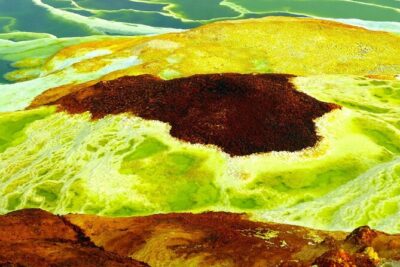
2-Night 3-Day Danakil Depression Tour without Flights
Read our review →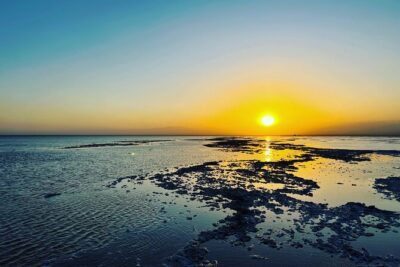
3 Days 2 Nights Small Group Danakil Depression Tours
Read our review →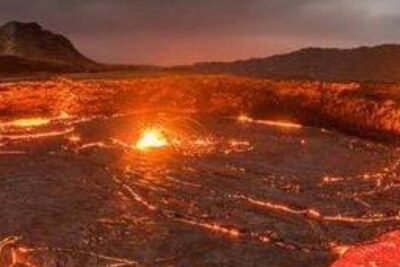
Browse the lists this tour appears in