

Reviewed · MARKETS
Go wheretheLocalsgo, Eatwhat thelocalseat!open Market&More Tours
The smartest feature here is the way food ties Addis Ababa together. You are not simply driven from sight to sight. You visit the National Museum, walk through a major open-air market, eat at a traditional restaurant, sip coffee at Tomoca, and finish with a quick look at the Lion of Judah. The meal stops give the city a strong local flavor, while a private guide keeps the pace flexible.
I like the airport pickup option, especially for a long layover, and I like the mix of Ethiopian dishes offered to vegetarians, vegans, and meat eaters. One five-star account describes spending three hours with Yonas, including vegetarian injera, lunch, and coffee at Tomoca. The main caution is timing: Mercato closes on Sunday, and the National Museum is closed Monday, so your day of the week matters.
Key points at a glance

- Food comes in several forms: Expect Ethiopian national dishes, vegetarian and vegan plates, chicken stew, organic fruit juices, and a traditional coffee tasting.
- Lucy anchors the museum visit: The National Museum displays the famous 3.2-million-year-old Australopithecus afarensis fossil.
- Mercato is not a quick photo stop: You walk through a large open-air market selling coffee, leather, jewelry, textiles, and other local goods.
- Sunday changes the market plan: Mercato is closed, so the tour uses Shiro Meda, known for Ethiopian clothing, scarves, bed covers, and small gifts.
- The private format helps with food choices: You can go at your own pace within a roughly 4 to 7-hour day, with a maximum of eight people.
- Coffee gets proper attention: You taste Ethiopian coffee at Tomoca, founded in 1953, and may buy roasted coffee or ground coffee to take home.
A food-first way to see Addis Ababa
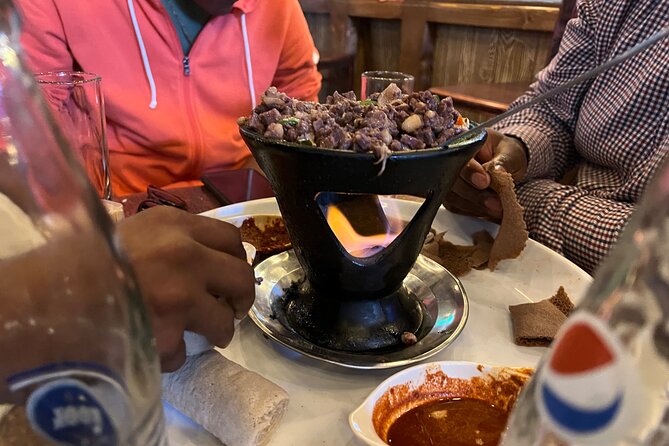
This is a good choice if you want more than a standard city drive. The route brings together several sides of Addis Ababa: human evolution, imperial and religious history, traditional art, market shopping, Ethiopian cooking, coffee culture, and modern city landmarks.
The experience costs $71.25 per person. That price includes a private air-conditioned vehicle, a professional driver-guide, Wi-Fi on board, National Museum admission, food tastings, coffee, and fruit juices. You are paying for transportation and coordination as much as for the food itself. If you tried to arrange all these stops during a short stay, the guide and vehicle would be the useful part.
The tour lasts about four to seven hours. That is a wide range, but it makes sense for a private outing with pickup, museum time, market walking, meals, and shopping. You can request pickup or meet at the designated location. Pickup is especially useful if you are connecting through Addis Ababa for a long layover, though you should allow enough time for the full route and your onward flight.
The food is not limited to one fixed plate. You can expect several Ethiopian specialties, with options for vegetarians, vegans, and meat eaters. The tour also includes fresh juices and a traditional coffee tasting. If you want to try local food but are unsure how much spice or how many dishes to order, having the guide arrange the meal removes much of the guesswork.
More market walks in Addis Ababa:
- Ethiopian Culinary Tour – Market, Food, Coffee Ceremony & more
★ 5.0 · 65 reviews - Addis Ababa +Mount Entoto View Point,Museums Palace Market Tours
★ 5.0 · 42 reviews - Market Tour and Cooking Class with a Coffee Ceremony at a Home in Addis Ababa
★ 5.0 · 32 reviews
Lucy and the National Museum of Ethiopia
The National Museum is the tour’s best history stop. The main draw is Lucy, the famous Australopithecus afarensis fossil dating back 3.2 million years. Seeing her gives the rest of the day a useful frame: Ethiopia is not just a place to shop and eat, but one of the key places in the human story.
The museum also covers the rise and fall of the Aksumite Empire, the influence of the Ethiopian Orthodox Church, and important parts of modern Ethiopian history. You will not be seeing only one fossil in a glass case.
The first floor focuses on Ethiopian artistic work, from older paintings and sculptures to contemporary pieces. On the second floor, traditional clothing, tools, and household objects show the variety of cultures and customs found across the country.
Admission is included, and the planned visit lasts about one hour. That is enough for a useful introduction, though anyone who wants to study every display will likely need more time than the tour schedule allows. The important practical point is that the museum is closed on Monday. Do not schedule this outing then unless the operator confirms a revised plan.
Walking through Mercato market

Mercato is the most active part of the day. This huge open-air market is a place to see everyday commerce rather than a polished shopping center. You walk through lanes lined with stalls and shops selling coffee, leather goods, jewelry, and other local products.
The market visit lasts about two hours, and that length matters. A short drive past Mercato would tell you almost nothing. Walking with a guide lets you see how the different sections fit together and gives you help when you want to browse or buy something.
The route may also include Piazza, the old Tomoca coffee shop, Zebra Gallery, the stadium area, and leather shops. These additions make the outing feel more like a city tour than a single market stop. You get a look at several well-known parts of Addis Ababa while keeping the main focus on local products and food.
Mercato can feel crowded and confusing, so this is not the place to rush. Keep your purchases modest if you have a flight later, and confirm prices before buying. The tour includes walking, so comfortable shoes are sensible. The supplied details do not promise that every section will be visited in the same order, so allow the guide to shape the route around the day’s conditions.
Shiro Meda on a Sunday
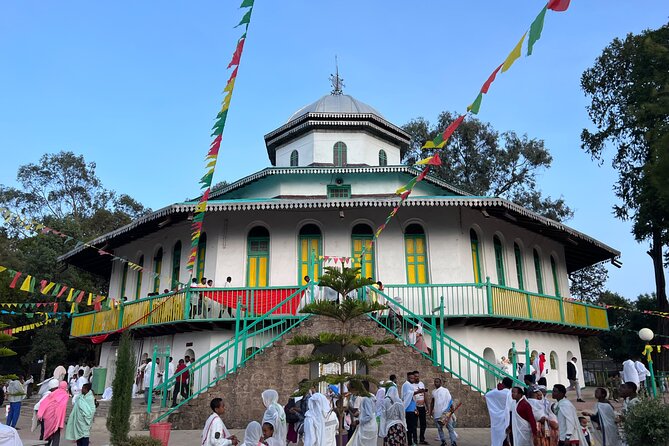
If you take the tour on Sunday, Mercato is closed. The replacement is Shiro Meda, a local market near the US Embassy. This is not simply a backup with a similar name. It has its own specialty: Ethiopian textiles and clothing.
You may find handwoven cotton clothing, wedding dresses, scarves, T-shirts, bed covers, tablecloths, necklaces, earrings, and other small gifts. The planned visit lasts about 45 minutes, so Shiro Meda is more focused than the longer Mercato walk.
This market may suit you better if you are looking for wearable souvenirs or household textiles rather than a broad market experience. It is also a practical place to shop for gifts that pack easily. The tradeoff is clear: Sunday visitors get a useful textile stop, but they do not experience Mercato itself.
More shopping trips in Addis Ababa:
- Addis Mercato Market
★ 5.0 · 22 reviews - Vintage Coffee Shops, Restaurants, Sightseeing in Addis Ababa
★ 5.0 · 17 reviews - Ethiopian Culinary Tour – Market, Coffee Ceremony and More
★ 5.0 · 10 reviews - Addis Ababa: Entoto hill and Mercato Market layover tour
★ 5.0 · 5 reviews
A proper Ethiopian meal at Yobez Traditional Restaurant

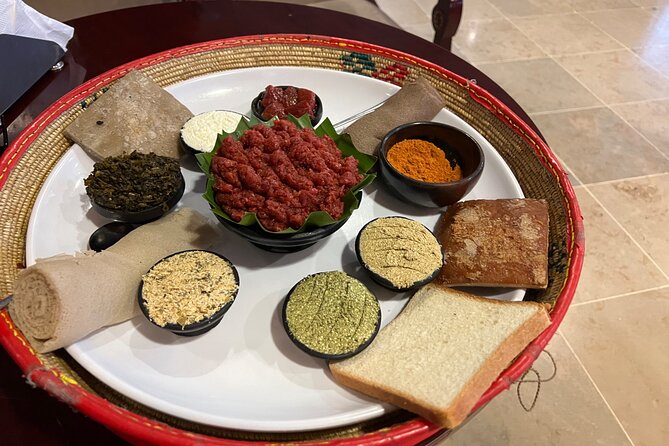
The food stop at Yobez is central to the experience. Ethiopian cooking is especially friendly to people who want to share several dishes, and the meal includes both vegetarian and meat choices.
The vegetarian spread may include cabbage, potatoes, beans, lentils, and chickpeas. These dishes reflect the fasting tradition found in Ethiopia, when many people avoid animal products. If you eat plant-based food, this is not a token side dish added to a meat meal. Vegetarian food is a major part of the country’s cooking.
Meat eaters can try doro wat, a spicy chicken stew made with local spiced butter, berbere, caramelized onions, and hard-boiled eggs. The seasoning can include pepper, cayenne, garlic, ginger, and other spices. The meal is served with Ethiopian staples, including injera in the experience described by one visitor.
You should arrive hungry. The tour promises food tasting rather than a single tiny sample, and the route includes more than one chance to eat and drink. Still, appetite varies, and the exact dishes may depend on the restaurant and the choices made during the private visit.
The restaurant stop is listed at about 48 minutes. That is enough for a substantial taste but not a long, slow dinner. If you want to linger over every dish, ask the guide early about the timing. The private format gives you more say than a large group tour, but the day still includes several scheduled stops.
Coffee at Tomoca since 1953
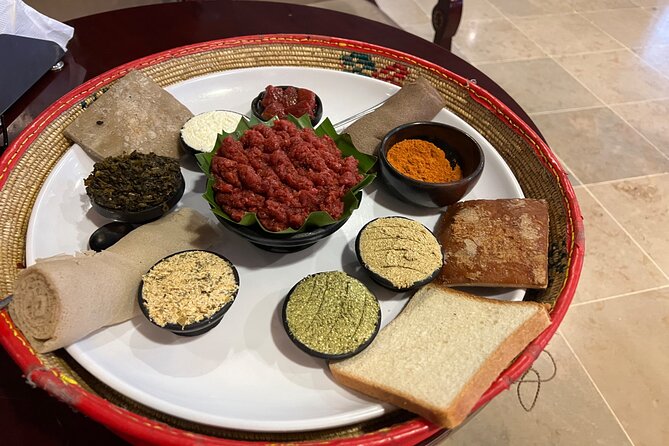
Tomoca Coffee gives the tour one of its most specific Addis Ababa moments. Located in the Piazza area, Tomoca has operated since 1953 and is described as the oldest coffee shop in Ethiopia.
The stop lasts about 15 minutes. That is brief, but it works as a focused coffee break rather than a full café visit. You can try original black coffee or coffee with milk, including a macchiato-style drink, and buy roasted coffee or ground coffee to take home.
I especially like this stop for visitors who want an edible souvenir with a clear connection to the place. Coffee is part of Ethiopia’s national identity, and Tomoca provides a historic setting for tasting it without asking you to commit to a long ceremony.
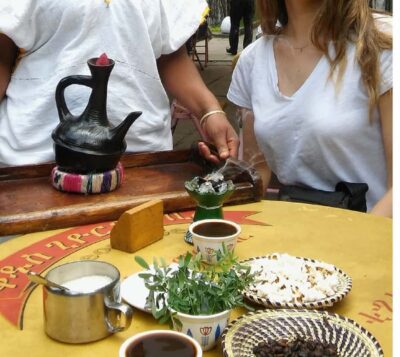
The tour also includes a traditional Ethiopian coffee ceremony and organic fruit juices. The itinerary places the Tomoca visit separately from the coffee ceremony, so you may get two different forms of coffee experience: a quick stop at an old city café and a more traditional tasting arranged as part of the food portion.
The Lion of Judah and the city’s symbols
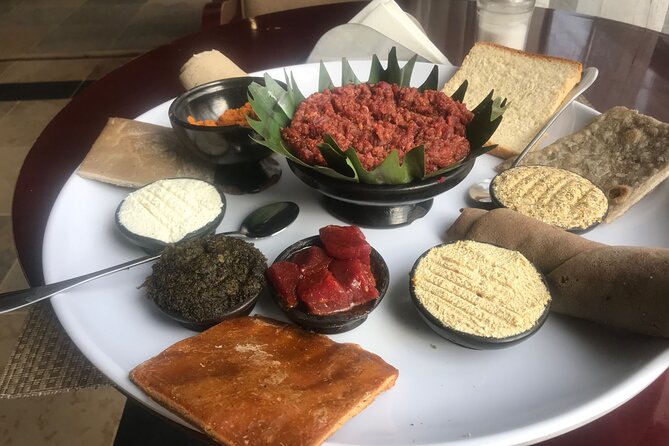
The Lion of Judah is a short stop of about 15 minutes. Its importance is symbolic rather than visual scale. The title has roots in the Bible and refers to the tribe of Judah and, in Christian tradition, Jesus Christ. It also became a symbol of the Ethiopian monarchy, especially Emperor Haile Selassie.
This is a quick landmark visit, not a long museum presentation. The guide can place the monument within Ethiopia’s religious and royal symbolism, adding context to the city drive. It works best as a brief final look at an emblem associated with the country rather than as a major sightseeing stop.
What the private format changes
The tour accepts a maximum of eight people, but it is presented as a private experience. That matters most during the food and market sections. You can ask questions, pause at a shop, or spend less time on a stop that does not interest you.
The flexible format also helps with dietary preferences. The included food covers non-vegetarian and vegan choices, and the guide handles the arrangements. You should still state your needs when booking, especially if you have allergies or avoid particular ingredients. The provided details confirm dietary range, but they do not promise allergy-free preparation.
A professional driver-guide and air-conditioned vehicle are included, along with Wi-Fi on board. The vehicle is useful because the route covers several parts of Addis Ababa, while Wi-Fi can help during a layover or a first day in the city. Tips for the driver-guide are not included, so plan for that separately.
One account describes a three-hour layover outing with Yonas, including vegetarian injera, a local lunch, coffee at Tomoca, and a drive around city sights. That makes the tour sound adaptable for a shorter schedule, but the advertised duration is four to seven hours. If you are using the tour between flights, confirm the timing and pickup plan directly before booking.
Who should book this Addis Ababa food tour?
I would choose this for a first visit to Addis Ababa, a short stay, or a layover when you want food and sightseeing in one organized outing. It is also a strong fit if you are curious about Ethiopian cuisine but do not know which dishes to order.
Vegetarians and vegans are well served by the stated menu, while meat eaters get a chance to try doro wat and other Ethiopian dishes. Shoppers will appreciate the choice between Mercato and Sunday’s Shiro Meda textile market.
This is less ideal if your main goal is a slow museum study, a long coffee ceremony, or several hours of unhurried shopping. The itinerary covers a lot. Its strength is variety, not extended time at one place.
The 100 percent recommendation rate and five-star score across 33 ratings suggest a strong record, and the specific praise for local lunch, vegetarian injera, Tomoca coffee, and a flexible city drive points to the experience’s best qualities. Still, the sensible choice depends on your schedule. Check the weekday, build in airport time, and remember that Mercato is unavailable Sunday while the National Museum is unavailable Monday.
Should you book it?
Book this tour if you want one well-organized half-day covering food, coffee, markets, and major city sights. At $71.25, the value is strongest when you use the vehicle and guide fully, especially for an airport pickup or a first day in Addis Ababa.
Choose it with confidence if you eat vegetarian or vegan food, want help navigating local markets, or prefer a private pace. Think twice if you want only a museum visit or a long, quiet meal. For most first-time visitors with four to seven hours available, the combination of Lucy, Mercato or Shiro Meda, Ethiopian dishes, Tomoca, and the Lion of Judah makes this a practical introduction to the city.
FAQ
How much does the Addis Ababa food and market tour cost?
The price is $71.25 per person. It includes the private vehicle, driver-guide, Wi-Fi on board, National Museum admission, food tastings, coffee tasting, and fruit juices.
How long does the tour last?
The experience lasts approximately four to seven hours.
Is pickup available?
Yes. Pickup is offered, and you can also meet at the designated meeting location.
What happens if I book on Sunday?
Mercato Market is closed on Sunday. The tour uses Shiro Meda Market instead, where you can shop for Ethiopian textiles, clothing, scarves, bed covers, tablecloths, jewelry, and small gifts.
Is the National Museum open every day?
No. The National Museum of Ethiopia is closed on Monday.
What food is included?
The experience includes Ethiopian national food tasting with vegetarian, vegan, and non-vegetarian dishes. Options include vegetables, beans, lentils, chickpeas, and chicken stew such as doro wat.
Does the tour include Ethiopian coffee?
Yes. It includes traditional coffee tasting, and the route stops at Tomoca Coffee in Piazza. You can taste black coffee or coffee with milk and buy roasted or ground coffee.
How many people can join the tour?
The activity has a maximum of eight participants and is presented as a private tour.
Just added around Addis Ababa
- Best of Addis Privet Guided city Tour★ 5.0 · 6 reviews
- Debre Libanos Monastery & Scenic Portuguese Bridge Tour★ 5.0 · 4 reviews
- Day trip Adadi Mariam, Melka Kunture and Tiya stele★ 3.1 · 5 reviews
- Addis Ababa: Entoto hill and Mercato Market layover tour★ 5.0 · 5 reviews
- Addis Night Life yod Abissinia★ 3.8 · 4 reviews
- A perfect day trip to Lake wenchi from Addis Ababa★ 5.0 · 3 reviews
- Addis Ababa city tour from Bole airport and All Hotels★ 4.0 · 3 reviews
- Addis Ababa Essentials: Flexible Full-Day City Sightseeing★ 5.0 · 3 reviews
Markets, compared.

Ethiopian Culinary Tour – Market, Food, Coffee Ceremony & more
Read our review →
Addis Ababa +Mount Entoto View Point,Museums Palace Market Tours
Read our review →
Market Tour and Cooking Class with a Coffee Ceremony at a Home in Addis Ababa
Read our review →
Ethiopian Culinary Tour – Market, Coffee Ceremony and More
Read our review →
Browse the lists this tour appears in