
Reviewed · NATIONAL PARKS
4 Days Trekking to Simien Mountain National Park
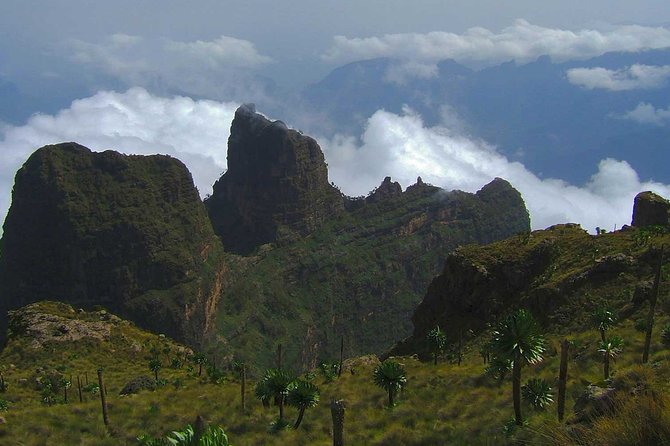
The real draw here is the scale of the Simien Mountains. You walk along high escarpments, past fields and villages, and toward summits above 4,000 meters. One day brings a traditional coffee ceremony in Gich; another brings giant lobelia, geladas, and a chance to spot the rare Walia ibex.
I like the steady change of scenery and the small group limit of eight. I also like that the route includes both natural highlights and ordinary farm life, rather than keeping you on a sightseeing loop. The main caution is altitude: this is a challenging mountain trek, not a casual park walk, and the final days reach very high ground.
Key points
- A four-day route across the Simien escarpment: You move from Sankaber and Gich toward Imet-Gogo, Buwahit, and Chenek instead of seeing the park from one roadside viewpoint.
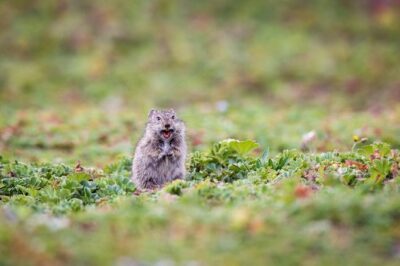
- Wildlife with real local character: Gelada baboons and Walia ibex are central attractions, with Ethiopia’s highland birds and unusual plants adding to the experience.
- A 500-meter waterfall: Jinbar River drops into the abyss near the Gich section of the route.
- A village coffee ceremony: The stop in Gich offers a direct look at farm life and Ethiopian coffee customs.
- Very high walking: The route includes Imet-Gogo at 3,926 meters, a summit around 4,070 meters, and Buwahit at 4,430 meters.
- Practical small-group setup: Pickup is available in Gonder, the group is capped at eight, and a park scout is arranged at Debark.
Why the Simien Mountains are worth four days
The Simien range is one of Ethiopia’s great walking areas. At least a dozen peaks rise above 4,000 meters, including Ras Dejen, Ethiopia’s highest mountain at 4,543 meters. The park was created in 1966, and the mountain range received UNESCO World Heritage status in 1978.
Those facts matter because the scenery here is not just a single famous viewpoint. The route cuts across a long chain of cliffs, valleys, ridges, fields, and volcanic formations. You see the mountains from several angles, and each walking day has a different feel.
I especially like the way the route mixes wild ground with inhabited country. You may watch gelada baboons feeding near the trail, then pass barley fields and enter Gich village. That combination gives the trek more meaning than a string of grand views.
The price is $275 per person. For four days, pickup, park arrangements, a scout, and long-distance vehicle transfers, that can be a sound value. Still, the supplied details do not spell out every inclusion, so I would confirm meals, camping equipment, accommodation, and guide arrangements before paying. That simple check is important on a remote mountain trip.
More national park days from Simien Mountains:
- 4 days semien mountain national park trekking,
★ 5.0 · 11 reviews - Simien Mountains National Park – 7 Day Trek
★ 5.0 · 5 reviews - 2 Days Wildlife Safari to Awash National Park
★ 4.5 · 21 reviews
Day 1: Gonder to Debark and Sankaber
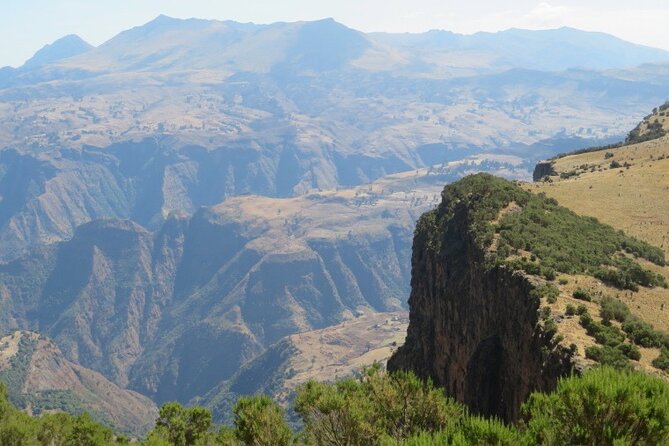
The trip begins with an 8:00 am pickup at Gondar Airport or your hotel. From Gonder, you travel about 100 kilometers on a paved road to Debark, the park headquarters. The drive takes roughly two hours.
Debark is where park permits are arranged and a scout is picked up. That is a useful part of the setup, since it puts the formal park entry process at the beginning rather than leaving you to sort it out on the trail.
After Debark, the vehicle continues for about another hour before the first walk. This opening hike is easy by the standards of the rest of the trek. It follows the northern edge of the escarpment and gives you views over the foothills and plains of northern Ethiopia.
That first walk is a good introduction. You get time to adjust to the setting before the harder climbs arrive, and gelada baboons may appear along the route. The night is spent at Sankaber.
The day includes a lot of driving, so you should not think of it as a full day on foot. That is not a flaw. The transfer is needed to reach the park from Gonder, and the gentle first walk gives you a chance to get your bearings at altitude.
Day 2: Sankaber, Jinbar Waterfall, and Gich village
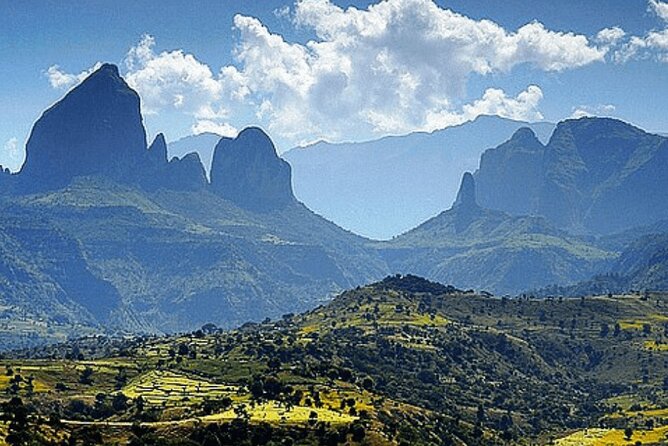
The second day brings the main walking rhythm. From Sankaber, you follow the northern escarpment eastward before dropping into the Kaba Valley. The trail then rises again toward Gich Abyss.
This section rewards steady pacing. You are moving between high ground and valley level, with cliff views opening and closing as the route bends. At a narrow ridge, the path reaches a cliff with a broad view toward the Simien foothills.
The star feature is Jinbar Waterfall. The Jinbar River plunges about 500 meters into the abyss, a sharp reminder of how steep these mountains are. The waterfall is not simply a stop for a photograph. It helps you understand the structure of the range, where rivers have cut deep gaps through the high volcanic plateau.
After about two hours, lunch is taken near the Jinbar River. The timing gives you a natural rest point before the route crosses barley fields toward Gich village.
Gich adds a welcome human touch. You can take part in a traditional coffee ceremony inside one of the village huts and learn about local farm life. I like this part of the itinerary because it breaks up the big scenery with a close look at how people live and work in the highlands.
From Gich, it is a short walk to Gich camp. The day is listed as about one day of activity, so expect a full mountain day rather than a quick outing. The combination of climbs, exposed viewpoints, fields, and village paths makes this one of the most varied sections.
You should also note that dramatic escarpment walks can feel exposed. The information provided does not describe trail widths or safety rails, so anyone uneasy around steep drops should discuss the route with the guide before setting out.
Day 3: Giant lobelia and the high cliffs of Imet-Gogo
Day three begins at Gich camp and heads through fields of giant lobelia. These tall, distinctive plants are one of the memorable signs that you are in Ethiopia’s high mountain zone. They give the walk a very different look from the fields and cliffs of the previous day.
The route reaches Imet-Gogo at 3,926 meters. From here, you can look across mountain valleys and toward unusual dome-shaped formations in the distance. The plan is to spend time at the summit, allowing you to take in the views instead of rushing straight onward.
Then the trail drops into the Jinbahir River Valley. This descent changes your view of Imet-Gogo and the surrounding volcanic rock. From below, the mountains can look as if huge sections have been blasted away. It is an excellent example of why walking matters here: the same peak can look completely different from the valley floor.
The trail later follows the edge of a nearly vertical escarpment. The cliffs rise or fall for several hundred meters, so this is a serious stretch for anyone sensitive to height. The route then climbs to a summit around 4,070 meters.
The supplied itinerary ends partway through the Day 3 description, so the exact finish and overnight details are not fully set out. That is worth clarifying when you book. You will want to know the expected walking hours, sleeping arrangements, and the plan for food on this high section.
Altitude is the key issue. Even fit walkers can feel the thinner air above 3,900 meters. The tour asks for moderate physical fitness and accepts people from age 12 to 70, but those age limits do not remove the need for sensible preparation. Go slowly, drink regularly, and tell your guide if you feel unwell.
More hikes and treks around Simien Mountains:
- 5-Day Northern Ethiopia Tour : 3D Simien Mountains Trek & Axum.
★ 5.0 · 9 reviews - Simien Mountains Trekking Adventure
★ 5.0 · 8 reviews - 2 Days Simien Mountains Trekking
★ 5.0 · 6 reviews - 3 Days Trekking Simien Mountains Tours
★ 5.0 · 6 reviews
Day 4: Buwahit, Walia ibex, and the road back to Gonder
The final walking day aims for Buwahit, described as the second-highest peak in the Simien Mountains at 4,430 meters. The climb is demanding, but it offers a strong finish to the route.
One major reward is the chance to see Walia ibex. This goat family animal is endemic to Ethiopia and is particularly associated with the Simien Mountains. Wildlife sightings are never guaranteed, but the species is one of the clearest reasons to choose this park over a standard mountain walk.
From Buwahit, the route offers views of the surrounding peaks and a possible sighting of Ras Dejen, at 4,543 meters the highest mountain in Ethiopia. You do not climb Ras Dejen on this itinerary, but seeing it from the route gives the final day a fitting sense of scale.
After the climb, you return to Chenek camp, where the vehicle waits. The drive back to Gonder takes about four hours. That makes Day 4 a long combination of walking and road travel, so you should be ready for a tiring finish.
The route’s high point is also its chief demand. Buwahit reaches 4,430 meters, and the tour is not suited to someone looking for easy walks with short transfers. If you want the mountain experience but are unsure about the altitude, ask if a shorter route is possible before booking. The information indicates some itinerary flexibility, but any changes should be agreed in advance.
Wildlife, plants, and the feel of the walk
The Simien experience works because several kinds of nature appear together. Gelada baboons may be seen on the first day, often near the open high ground where their distinctive social groups are easy to notice.
The Walia ibex is the more special prize. It is endemic to Ethiopia, and the Buwahit section gives you a chance to look for it in its mountain home. The park is also noted for varied bird life, though the supplied details do not name particular species or promise sightings.
Plant life matters too. Giant lobelia fields near Gich are among the most memorable features of Day 3. They make the high-altitude environment feel unlike a normal European or North American mountain trail.
The route also gives you volcanic forms, deep river cuts, barley fields, and sheer escarpments. That variety is useful for photographers and natural-history enthusiasts, but it also means the walking conditions change often. You are not repeating the same type of trail for four days.
Guides, group size, and the service element
The experience is operated by Ethio Target Tours. Solomon is associated with the company, and Jon is named as a guide for this trek. Past booking experiences describe the team as punctual, reliable, friendly, and willing to adjust plans when asked.
I would treat that as a positive sign, especially in a place where transport, permits, guides, and park staff need to work together. The inclusion of a park scout at Debark is also practical.
The maximum group size is eight. That is small enough for a guide to keep an eye on the pace and for the group to move without the feel of a large coach excursion. It also gives you a better chance to ask questions during the village and nature sections.
Still, confirm who will guide your particular departure. Names and staff can change. Ask who will lead the walk, whether a scout is included, and who handles the vehicle transfers.
Who should book this trek?
This is a strong choice for you if you want a serious highland walk with cultural stops and wildlife, rather than a short scenic outing. It suits people who enjoy full days outside and are comfortable with climbs, descents, steep viewpoints, and altitude.
It is also a good match for anyone interested in natural history. The combination of geladas, Walia ibex, giant lobelia, unusual volcanic formations, and high mountain birds gives the route plenty to watch beyond the scenery.
You should think twice if you have no experience with high-altitude walking or if you want predictable, gentle trails. The tour requires moderate fitness, and several days reach above 4,000 meters. The age range is 12 to 70, but the ability to walk comfortably at altitude matters more than the number on your passport.
Bring questions about what is supplied. The price and route are clear, but the details provided do not list every meal, tent, sleeping arrangement, or piece of equipment. Those items can change the practical value of a trek.
Booking, cancellation, and final value
Pickup is available from Gondar Airport or a Gonder hotel, and the activity ends back at the meeting point after the return drive. Confirmation is sent within 48 hours, subject to availability. The group maximum is eight, and the experience requires a minimum number of participants.
You can cancel up to 24 hours before the start time for a full refund. Cancellations or changes within 24 hours are not refunded or accepted. Poor weather or failure to reach the minimum group size can lead to a different date, another experience, or a full refund.
At $275 per person, I see good value in the four-day structure, especially if the quoted price covers the park arrangements, scout, guiding, and transport described. The main thing is to confirm the missing practical details before you commit.
Should you book the Simien Mountains trek?
Book it if you want Ethiopia’s high country in a proper four-day format. The route gives you cliffs, waterfalls, village life, geladas, giant lobelia, Walia ibex, and views toward Ras Dejen, with enough time to feel the scale of the range.
Skip it if altitude and steep mountain walking are likely to make the trip stressful. For the right walker, this is a demanding but rewarding route, and the small group, local staff, and mix of nature and village life make it more than a simple peak visit.
FAQ
Where does the trek start?
The trek starts with pickup at Gondar Airport or a hotel in Gonder. The listed meeting time is 8:00 am.
How long is the drive from Gonder to Debark?
The drive from Gonder to Debark is about 100 kilometers and takes around two hours on a paved road.
What happens at Debark?
Park permits are arranged at the park headquarters in Debark, and a park scout is picked up before the vehicle continues toward the first walking section.
How high does the trek go?
The route includes Imet-Gogo at 3,926 meters, a summit around 4,070 meters, and Buwahit at 4,430 meters. It also offers views toward Ras Dejen, which is 4,543 meters high.
What wildlife might I see?
You may see gelada baboons during the early part of the trek and Walia ibex near Buwahit. The park also has varied bird life.
Is there an age limit?
The stated age range is 12 to 70. Participants should also have a moderate level of physical fitness.
How many people can join the tour?
The group can include a maximum of eight people. Confirmation is subject to availability and the required minimum number of participants.
More Four-Day Trips From Simien Mountains
- Simien Mountains – 4 Days
★ 4.0 · 7 reviews - 4-Day Tour: Tigray Churches & Danakil Depression Adventure.
★ 5.0 · 11 reviews - Omo Valley 4days 3nights Cultural Tour
★ 5.0 · 7 reviews - Trekking in Ethiopia’s Lalibela Wollo Highland 4 Days / 3 Nights
★ 5.0 · 6 reviews
Just added around Simien Mountains
- Simien Mountains National Park – 7 Day Trek★ 5.0 · 5 reviews
- Day trek to Simien Mountain★ 5.0 · 5 reviews
- Day trek to Simeien Mountains★ 5.0 · 3 reviews
- Simien Mountains – 4 Days★ 4.0 · 7 reviews
- 3 Days Simien Mountains Trekking★ 5.0 · 3 reviews
- 2 Nights 3 Days Trek to Semien Mountain★ 5.0 · 4 reviews
- 2 Days Simien Mountains Trekking★ 5.0 · 6 reviews
- 3 Days Trekking Simien Mountains Tours★ 5.0 · 6 reviews
National Parks, compared.
5 Days Tour to World Heritage–listed Harrar, Dire Dawa and Awash NATIONAL PARK
Read our review →
Browse the lists this tour appears in