
Reviewed · COFFEE EXPERIENCES
Addis Ababa City Experience : Markets, Coffee & Local Life
The most memorable part of this Addis Ababa tour may be the contrast: one moment you are looking at Lucy, a 3.2-million-year-old fossil, and the next you are haggling over crafts or watching coffee being prepared in the traditional way. Ethiopia’s capital makes more sense when you see its museums, churches, markets, and hills together.
I like the private format, which gives you room to ask questions and adjust the pace. I also like the mix of major sights and ordinary city life, from Merkato’s maze of stalls to a local coffee house. The main drawback is time. The advertised tour lasts four hours, yet the listed stops add up to longer than that, so ask for the exact route and timing before you set off.
Key points to know before you book
- Lucy at the National Museum: See the famous 3.2-million-year-old hominid fossil and exhibits on Ethiopia’s archaeology, art, and past.
- Views from Mount Entoto: Reach the hills above Addis Ababa for a cooler setting, eucalyptus trees, historic sites, and broad city views.
- Merkato with a guide: Walk through Africa’s largest open-air market with help finding the right lanes and understanding local trade.
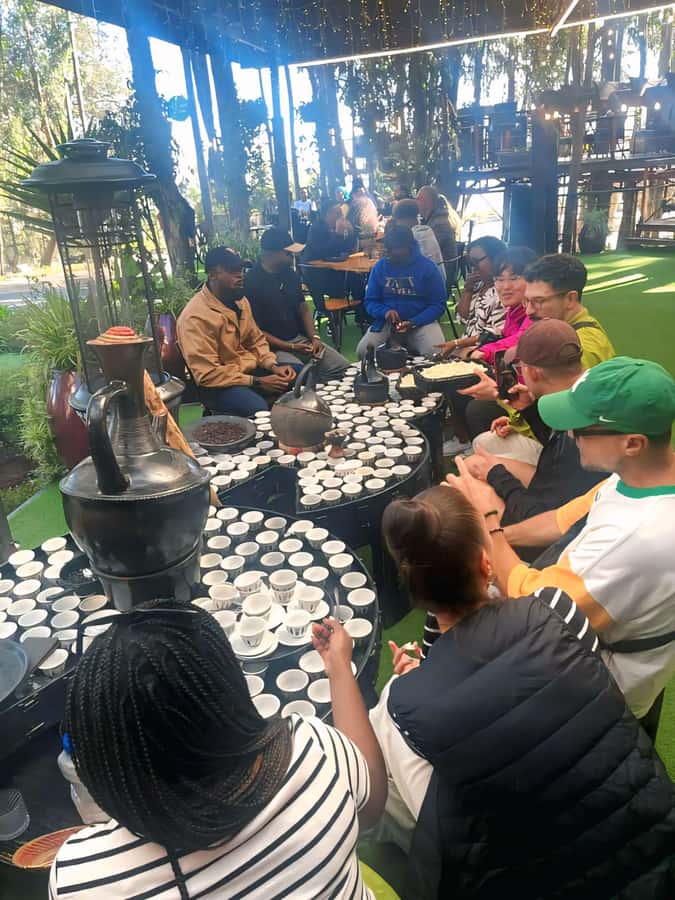
- Coffee as a cultural stop: Taste freshly brewed Ethiopian coffee and learn why the ceremony matters far beyond the drink itself.
- Private vehicle and pickup: Transportation, pickup, drop-off, bottled water, and entrance fees for the listed attractions are included, except Holy Trinity Cathedral.
- Flexible guiding: The tour is offered in English, Amharic, German, or French, with advance notice needed for language requests.
Why this four-hour Addis Ababa route works

Addis Ababa is not a city you understand from one viewpoint or one museum. It is Ethiopia’s political center, a highland capital, a major religious center, and a place where old customs and modern city life sit side by side.
This tour gives you a quick but varied introduction. You move from national history to religious art, from a crowded market to a mountain ridge, then finish with coffee and more city sightseeing. That variety is the real value.
You are not simply ticking off monuments. At the National Museum, you meet Ethiopia’s place in human history. At Holy Trinity Cathedral, you see how faith and royal memory shaped the country. At Merkato, you get a look at the everyday economy. At Mount Entoto, you understand the city’s setting from above.
Because this is a private group, the experience should feel more personal than a large coach tour. You can ask your guide to explain a display, pause for photographs, or spend more time shopping if the schedule allows. Elias has been singled out for being considerate, kind, charming, and flexible, so ask if he is available when you book. Guides can change, but his name is useful to know.
More Ethiopian coffee experiences in Addis Ababa:
- Ethiopian Culinary Tour – Market, Food, Coffee Ceremony & more
★ 5.0 · 65 reviews - Market Tour and Cooking Class with a Coffee Ceremony at a Home in Addis Ababa
★ 5.0 · 32 reviews - Vintage Coffee Shops, Restaurants, Sightseeing in Addis Ababa
★ 5.0 · 17 reviews
Meeting Lucy at the National Museum
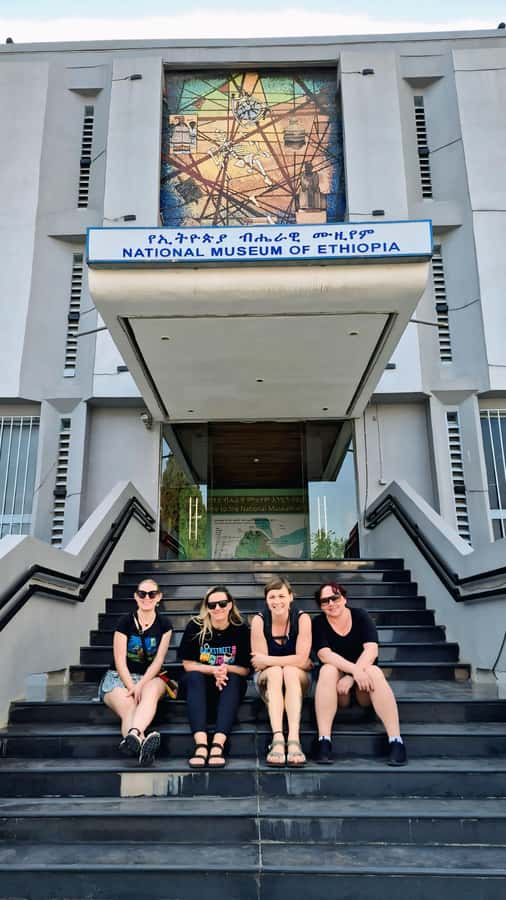
The National Museum is the natural opening for this experience. The star attraction is Lucy, the famous 3.2-million-year-old hominid fossil. Seeing her gives you a quick connection to one of Ethiopia’s most important contributions to the study of human origins.
Plan on about an hour here. The museum also covers archaeology, culture, and art, so the visit is not limited to one fossil. Your guide can help place the objects in context and point out why Ethiopia matters in the story of early humanity.
The museum works best when you take your time with a few displays rather than trying to absorb everything. One hour is enough for a guided introduction, but it is not a full museum study visit. If early human history is your main interest, you may want to ask how much time can be devoted to Lucy and the archaeological rooms.
The National Museum is closed on Mondays. On that day, the route changes to another attraction, so confirm the replacement before you go if this stop matters to you.
Mount Entoto and the city below
Mount Entoto gives the tour a welcome change of pace. The hills above Addis Ababa offer a cooler breeze, eucalyptus forests, and wide views over the capital. After museum rooms and city traffic, the open setting can be a refreshing part of the day.
The mountain also links the scenery to Ethiopia’s royal past. The route includes Maryam Church and Menelik II’s palace, along with time for photographs and a guided visit. This is where you get a sense of the area’s role during the early growth of Addis Ababa.
Bring a hat, sunscreen, and comfortable shoes. The tour involves moderate walking, and the mountain stop includes time on foot rather than only a quick vehicle lookout. A camera is useful here, especially if the air is clear.
Your guide may need to balance the mountain stop against the other attractions. The listed time is about an hour and a half, which is generous for a short city tour but leaves less room elsewhere. If the city market and coffee ceremony are your priorities, say so at the beginning.
Reading Addis Ababa through Merkato

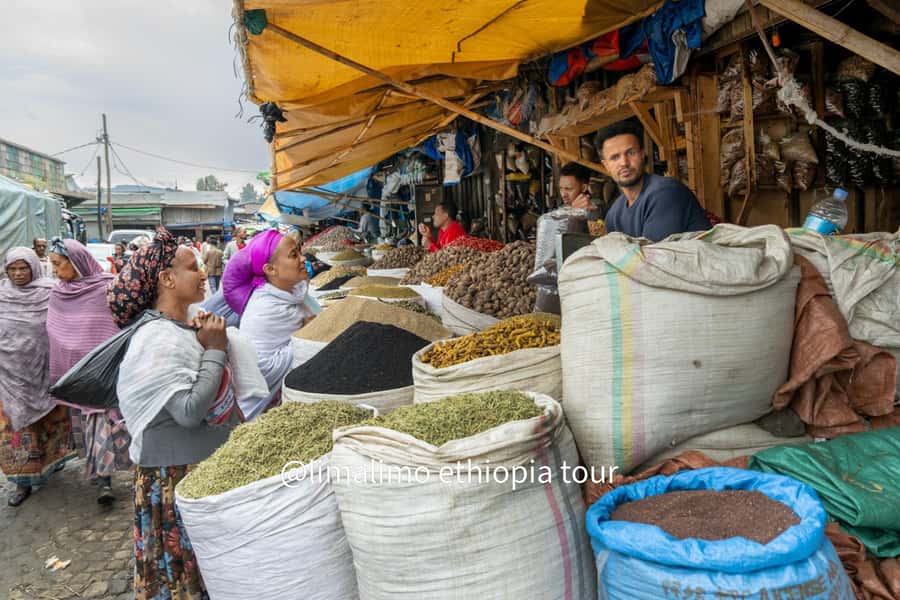
Merkato is the tour’s most direct look at daily commerce. It is described as Africa’s largest open-air market, and the experience is less about one landmark than about moving through a network of lanes and stalls.
You might find spices, coffee beans, handmade crafts, traditional clothing, and household goods. The range matters because it shows how much of city life happens through small-scale trade. This is a working market, not a polished shopping center, so expect noise, movement, crowds, and plenty to look at.
A guide is especially useful here. Merkato can be confusing, and a local guide can help you move through it with more confidence while explaining what you are seeing. You also get help with shopping and bargaining, though the tour does not promise that every purchase will be arranged for you.
Allow yourself some restraint. The market is an easy place to buy more than you can carry, and personal purchases are not included in the tour price. Carry cash, as requested, and keep your belongings secure. Bottled water is included, but snacks and meals are not.
Merkato is closed on Sundays. If your tour falls on that day, the operator visits another local market instead. That substitute may still provide a useful look at local trade, but it will not be the same market experience, so Sunday bookings should be made with that difference in mind.
More city tours in Addis Ababa:
- Addis Ababa Guided City Tour With Airport & Hotel Pick Up
★ 5.0 · 237 reviews - Full-Day Private City Tour of Addis Ababa
★ 5.0 · 147 reviews - Addis Ababa Authentic Private City Tour
★ 5.0 · 134 reviews - Authentic Addis Ababa City Tour with a Local Guide
★ 4.9 · 109 reviews
Coffee, conversation, and a slower finish

The coffee stop adds something that a standard sightseeing route often misses. Ethiopia is closely tied to coffee culture, and the traditional ceremony gives you a chance to see preparation, presentation, and tasting as a social custom rather than a quick caffeine break.
You will visit a local coffee house and taste freshly brewed coffee. The guide explains the place of coffee in Ethiopian life, making this stop more meaningful than simply ordering a cup between attractions.
The coffee experience is also a useful pause after Merkato. You can sit, ask questions, and process what you have seen. The schedule also allows time for sightseeing, shopping, arts and crafts, and possibly sunset, depending on the start time and local conditions.
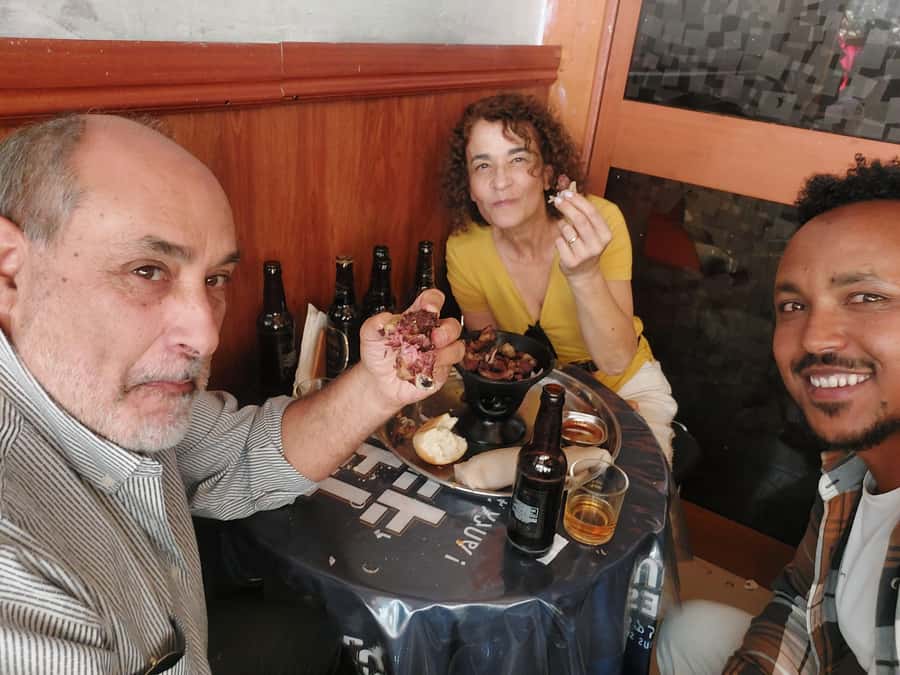
The exact coffee house is not specified, and neither are the number of servings or food pairings. If you have dietary restrictions, mention them before departure. Meals are not included unless specifically stated in your booking.
Holy Trinity Cathedral and imperial memory
Holy Trinity Cathedral is one of Ethiopia’s major religious sites. Its stained-glass windows and grand design make it an important stop for architecture as well as faith.
The cathedral is also tied to the country’s modern royal past. Emperor Haile Selassie and his wife are buried here, giving the site a strong historical connection to Ethiopia’s twentieth century.
Dress and behavior should be respectful at this religious site. Your guide can explain its importance and point out artistic details that are easy to miss on a quick visit. The tour includes the guided stop, but the entrance fee for Holy Trinity Cathedral is not included, so keep cash available.
The cathedral appears later in the listed route, although the tour’s exact order can change. Traffic, opening times, holidays, and local conditions may affect the sequence. That flexibility is useful in Addis Ababa, but it also means you should not expect every stop to follow the same clockwork order.
The Ethnological Museum option
The Ethnological Museum is located in the grounds of Addis Ababa University and occupies the former palace of Emperor Haile Selassie. Its focus is different from the National Museum. Instead of concentrating mainly on archaeology and early human history, it presents customs, traditions, objects, and ways of life from Ethiopia’s many ethnic groups.
This is a valuable addition if you want cultural context. It can help you connect items seen in the market, such as clothing or crafts, with the communities and traditions behind them.
The supplied route lists the museum in the tour description, but the timed itinerary does not give it a separate stop. That suggests it may be included when time and conditions allow, or used as an alternative attraction when another site is closed. Ask your guide to confirm whether it is part of your specific route.
What the $44 price gets you
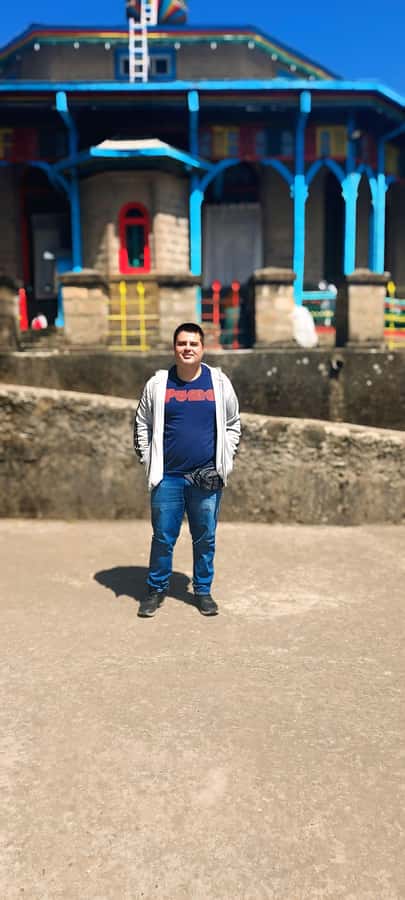
At $44 per person, the tour offers solid value if you want a guided introduction rather than a simple car ride around town. The price includes pickup and drop-off in Addis Ababa, an air-conditioned vehicle, an English-speaking local guide, bottled water, the traditional coffee experience, and entrance fees to the listed attractions except Holy Trinity Cathedral.
The private format improves the value for couples, families, or small groups. You are not paying only for transport. You are also paying for help at a difficult market, interpretation at museums and historic sites, and the ability to discuss what you see.
The price does not cover personal purchases, snacks, meals, travel insurance, optional activities, or the cathedral entrance fee. Those costs are easy to manage, but they should be part of your budget.
One point deserves clarification. The advertised duration is four hours, while the listed stop times show one hour at the National Museum, one and a half hours at Mount Entoto, one hour at Merkato, one hour for the coffee and city section, and one hour at Holy Trinity Cathedral. Those times total more than four hours, before driving is counted. Ask the provider which stops are shortened or combined on your date.
Walking, weather, and practical comfort
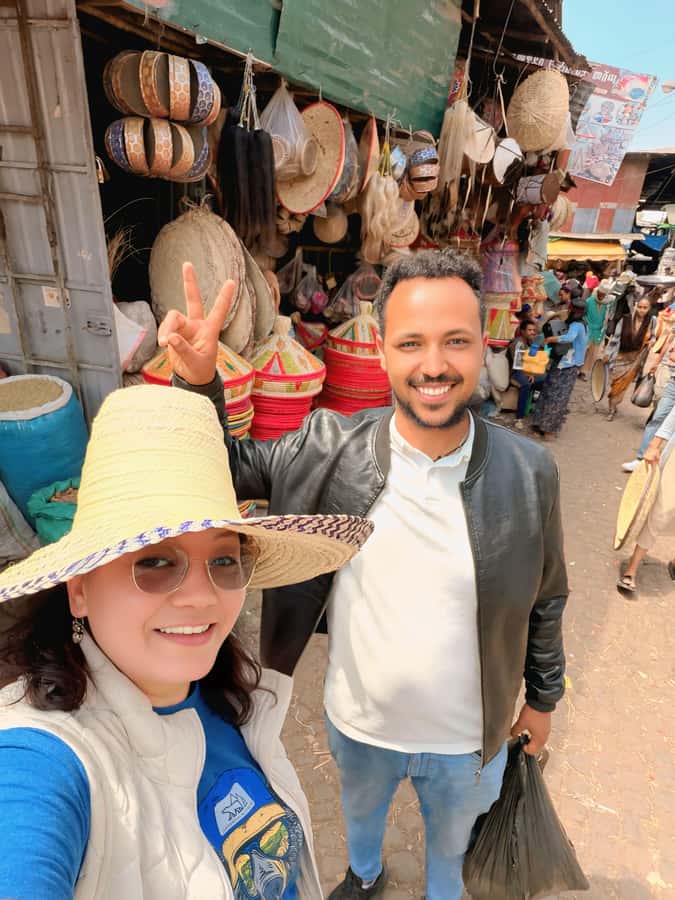
This is a moderate walking tour. You will walk through museum grounds, historic sites, market lanes, and possibly uneven areas around Mount Entoto. It is not suitable for people with back problems or recent surgeries, and it is not recommended for people over 95.
Comfortable shoes matter more than smart clothing. Bring a hat, sunscreen, a camera, cash, and a change of clothes. The change of clothes may be useful if your day becomes warm or dusty, though temperatures can feel cooler on Mount Entoto.
Transportation is provided in a comfortable, air-conditioned vehicle, which makes the route easier than arranging separate taxis between each stop. Pickup and drop-off are included in Addis Ababa. The start time depends on availability, so check it before booking.
The tour can be conducted in English, Amharic, German, or French. English is the standard language noted for the experience, while other languages should be requested in advance.
Who should book this Addis Ababa tour
I would choose this experience if you have limited time in Addis Ababa and want several sides of the city in one outing. It suits first-time visitors, couples, families, and anyone who prefers a private guide to a large group.
It is especially useful during a short stopover. You get a museum, a religious site, a mountain viewpoint, a major market, and coffee culture without having to plan several separate visits.
I would be more cautious if you dislike crowded markets, want long museum visits, or need a tightly fixed schedule. Merkato can feel intense, and the number of listed attractions may make the day feel rushed. People with mobility limitations should also discuss the walking demands in advance.
The tour has a 4.8 rating from five reviews, with particular praise for guide Elias’s hospitality, kindness, flexibility, and relaxed approach. That is a small review sample, so I would treat it as encouraging rather than conclusive. Still, those are exactly the qualities that matter on a private city tour, especially when the route may change.
Should you book it?
Book this tour if you want a lively first look at Addis Ababa and value a local guide who can connect museums, royal sites, religion, markets, and coffee. The $44 price is fair for private transport, entrance fees at most listed attractions, and a four-hour introduction.
Before paying, confirm three things: the exact duration, whether the Ethnological Museum is included, and which attractions replace the National Museum on a Monday or Merkato on a Sunday. If you are comfortable with some schedule changes and moderate walking, this is a useful, well-rounded way to get your bearings in Ethiopia’s capital.
FAQ
How long does the Addis Ababa city experience last?
The advertised duration is four hours. The timing of individual stops may change because of traffic, opening hours, holidays, local conditions, and the actual route used that day.
Is pickup and drop-off included?
Yes. Pickup and drop-off in Addis Ababa are included, along with transportation in a comfortable, air-conditioned vehicle.
What attractions are included?
The planned experience includes the National Museum of Ethiopia, Mount Entoto, Merkato, a traditional coffee house, Holy Trinity Cathedral, Meskel Square, and possibly the Ethnological Museum. The exact route may change.
Is Merkato open every day?
Merkato is closed on Sundays. If your tour takes place on a Sunday, an alternative local market is visited instead.
Is the National Museum open on Mondays?
No. The National Museum of Ethiopia is closed on Mondays. The tour adjusts the route to include an alternative attraction.
Is the Holy Trinity Cathedral entrance fee included?
No. Entrance to Holy Trinity Cathedral is not included. Entrance fees to the other mentioned attractions are included, according to the tour details.
Just added around Addis Ababa
- Fully guided city tours of Addis Ababa with hotel pickup★ 5.0 · 5 reviews
- From Addis Ababa: 2-Day Awash National Park and Crater★ 4.1 · 3 reviews
- From Addis Ababa: Bisheftu Lake Side Tour★ 4.8 · 3 reviews
- Food tour in Addis Ababa with airport pick-up.★ 3.5 · 3 reviews
- Addis Ababa at a Glance★ 5.0 · 3 reviews
- DebreLibanos & Portuguese Bridge day trip from Addis Ababa★ 4.4 · 5 reviews
- Best of Addis Privet Guided city Tour★ 5.0 · 6 reviews
- Debre Libanos Monastery & Scenic Portuguese Bridge Tour★ 5.0 · 4 reviews
Coffee Experiences, compared.
Ethiopian Culinary Tour – Market, Food, Coffee Ceremony & more
Read our review →
Market Tour and Cooking Class with a Coffee Ceremony at a Home in Addis Ababa
Read our review →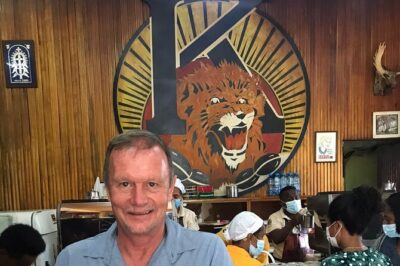
Vintage Coffee Shops, Restaurants, Sightseeing in Addis Ababa
Read our review →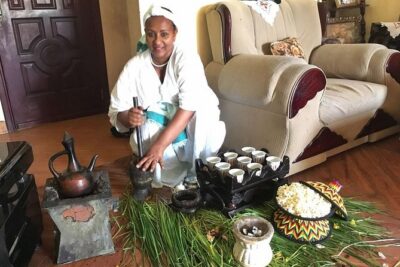
Ethiopian Cooking Class and Coffee Ceremony with a Local in Addis with transfers
Read our review →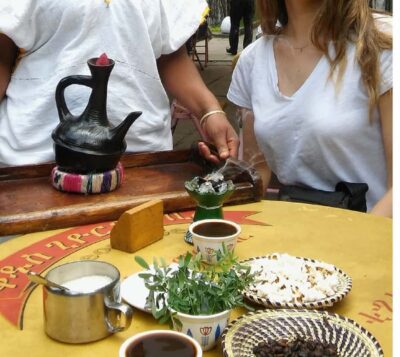
Ethiopian Culinary Tour – Market, Coffee Ceremony and More
Read our review →
Ethiopia coffee cupping class/Ethiopian food injera making
Read our review →
Unique Ethiopian Cooking Class and Coffee Ceremony with a Local in Addis Ababa
Read our review →Browse the lists this tour appears in