

Reviewed · TRIBAL TOURS
Tribes of the Ethiopian Omo Valley – 9 Day Tour
The most striking part of this nine-day journey is the sheer change in pace and place. You begin with museums, cathedrals, and mountain views in Addis Ababa, then travel south by road into remote parts of Ethiopia where village visits, markets, wildlife, and ancient stone monuments shape the trip. The Omo Valley is not a quick sightseeing stop. It is a long, demanding route through a culturally complex region.
I like the wide cultural range, from the Dorze people’s distinctive houses and false-banana bread to the Mursi communities near Mago National Park. I also like the practical design: an air-conditioned vehicle, a professional guide, scout fees, and most meals are included. The main drawback is the amount of time spent on the road, with several long driving days and basic conditions in the south.
Key points to know before booking
- The tour reaches the Mursi near Mago Park, one of the most remote and distinctive parts of the route.
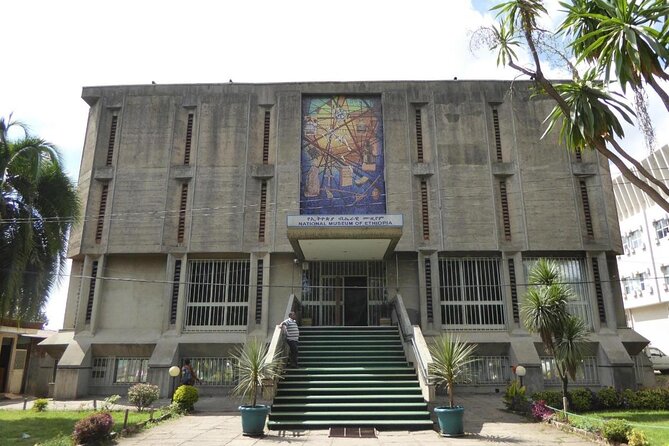
- Addis Ababa gets a useful one-day introduction, including Lucy, two major museums, cathedrals, and Entoto Mountain.
- Local markets are built into the route, including the Thursday market at Key Afer.
- Lake Chamo adds wildlife to the cultural focus, with crocodiles, hippos, and water birds seen from a boat.
- The $1,111 price includes major trip costs, including transport, guide services, entrance fees, and eight breakfasts, lunches, and dinners.
- Road time is a serious part of the experience, so you should have moderate physical fitness and patience for long transfers.
Addis Ababa begins the trip with history and altitude
Your arrival day is intentionally light. A company representative meets you at the airport and takes you to a city-center hotel, leaving time to rest. That matters after an international flight, since the tour becomes much more active once you head south.
The first full day gives you a compact introduction to Ethiopia’s capital. You visit the National Museum, the Ethnological Museum, Holy Trinity Cathedral, St. George’s Cathedral, and Entoto Mountain. It is a full seven-hour program, so wear comfortable shoes and expect a steady pace.
At the National Museum, the main attraction is Lucy, the fossilized remains of an Australopithecus afarensis hominid who lived in Ethiopia about 3.2 million years ago. Seeing Lucy gives the entire trip an older frame of reference. You are not simply visiting present-day communities. You are also moving through a country central to the story of human origins.
The Ethnological Museum is set in the former palace of Haile Selassie, within the grounds of Addis Ababa University. Its displays help you understand Ethiopia’s many cultures before you reach the Omo Valley. I consider this stop especially useful because the southern part of the trip can otherwise feel like a series of quick village visits without enough context.
Holy Trinity Cathedral and St. George’s Cathedral add religious and political history. Holy Trinity, known in Amharic as Kidist Selassie, is one of Ethiopia’s most important Orthodox churches. St. George’s was built by Italian prisoners of war after Ethiopia’s victory at Adwa in 1896. Entoto Mountain then gives you a higher view and a connection to the early plans for Addis Ababa under King Menelik.
An evening at a traditional Ethiopian restaurant, with local food and dancing, is offered as part of the city program. Alcohol is not included, so drinks are your own expense. The evening can be a pleasant introduction to Ethiopian food and performance, but the schedule is already long, so you may prefer an early night if you are still adjusting to travel.
More Omo Valley tribal trips:
- Arba Minch, Dorze Tribe, Konso, and Awasa Private 4 Days Tour from Addis Ababa
★ 5.0 · 3 reviews - 6 Days Omo Valley Tribes Tours From Addis Ababa
★ 5.0 · 33 reviews - 9 Days Tours To Danakil Depression, Simen MNP, Lalibela With Omo Valley Tribes
★ 5.0 · 11 reviews
Tiya and the long road south to Arba Minch
On Day 3, you leave Addis Ababa and travel toward Arba Minch. The first major stop is Tiya, a World Heritage site in the Soddo region. The archaeological area contains 36 monuments, including 32 carved stone stelae marked with symbols that remain difficult to interpret.
Tiya is a good stop for anyone who wants something older and quieter than the major cities. The exact age and meaning of the monuments are not fully established, which makes the site more intriguing than a neatly labeled museum display. You have about two hours there, followed by lunch in Sodo and arrival in Arba Minch late in the afternoon.
This is also your first clear taste of the tour’s road-based nature. The itinerary gives a sequence of destinations, but it does not promise short transfers or frequent comfort stops. I would think of the driving as part of the journey rather than dead time, while also being honest that long hours in a vehicle may wear you down.
Lake Chamo and the Dorze village visit
Day 4 combines wildlife with one of the trip’s most memorable cultural stops. A boat ride on Lake Chamo, within the Nech Sar Park area, offers the chance to see large crocodiles, hippos, and many water birds in the wild. The boat gives you a different view of southern Ethiopia, and it breaks up the road travel with time on the water.
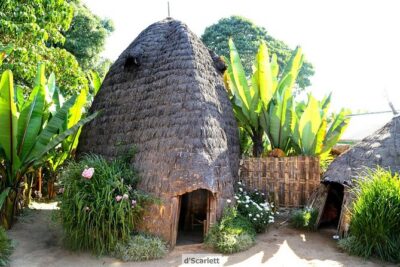
After lunch in Arba Minch, you head to Chencha to visit a Dorze village. The visit includes a traditional Dorze house, bread made from false banana, and locally produced alcohol. These details make the stop more useful than a simple photo opportunity because you see how food and homes connect to daily life.
You should approach village visits with care and respect. The information describes photography at the Erbore stop later in the trip, but it does not set out detailed rules for every community. Ask your guide before taking pictures, and treat the visit as an encounter with people rather than a staged display.
The Dorze excursion lasts about three hours, with a return to Arba Minch in the evening. It is one of the more manageable days in the southern part of the itinerary, although the travel to and from Chencha still adds time.
Konso, Erbore, and the road to Turmi

On Day 5, the route turns toward Turmi. Stops are planned at Karat Konso, Weito, and Erbore. The Erbore stop is specifically described as a chance to photograph members of the Erbore community. Again, your guide is the right person to ask about local permission and appropriate behavior.
The Konso area adds another cultural layer to the trip. The itinerary later includes Karat Konso again, so the route is not simply a straight line from one famous community to another. You should expect short visits along the way rather than long, detailed tours at every stop.
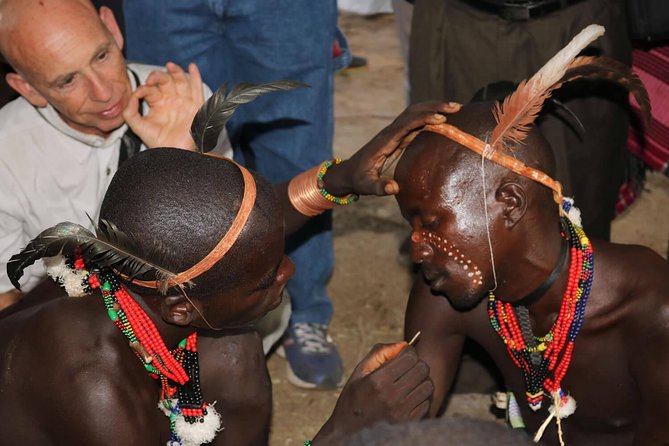
Turmi is associated with the Hamer people, and there may be a chance to attend a bull-jumping ceremony in a nearby Hamer village if the timing works. This is not guaranteed, so you should treat it as a possible bonus, not a promised event. After arrival, you rest at the lodge.
The journey takes about five hours according to the schedule, but road conditions and local timing can affect the day. This is one reason the tour suits people who prefer a planned route and local support over arranging every transfer independently.
A few more Addis Ababa trips worth weighing up
- 3 Days Omo Valley Tour
★ 5.0 · 24 reviews - 5 Days Omo Valley Tours
★ 5.0 · 15 reviews - 6 Days Lalibela, Omo Valley and Harar
★ 5.0 · 15 reviews - Private Omo Valley Tours From Addis Ababa
★ 5.0 · 12 reviews
Key Afer market day and the route to Jinka
Day 6 takes you from Turmi to Jinka, with a stop at Key Afer. The local market takes place every Thursday and draws Hamer, Benna, Konso, Ari, and other people from the South Omo region. If your schedule places you there on Thursday, this can be one of the most rewarding stops because markets show ordinary trade and social contact rather than only formal cultural presentations.
The market is also one of the best places to remember that the Omo Valley is not a museum. People are buying and selling, meeting relatives, and handling daily business. You are seeing a living region with its own rhythms.
The schedule allows about two hours at Key Afer before continuing to Jinka late in the afternoon. If your date does not align with Thursday, the market visit may not offer the same experience. The supplied schedule does not describe a replacement activity, so ask about the exact market day when confirming your dates.
Mago Park and the Mursi communities
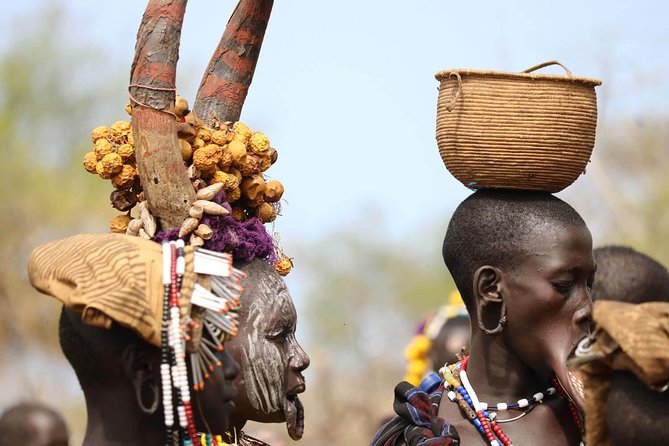
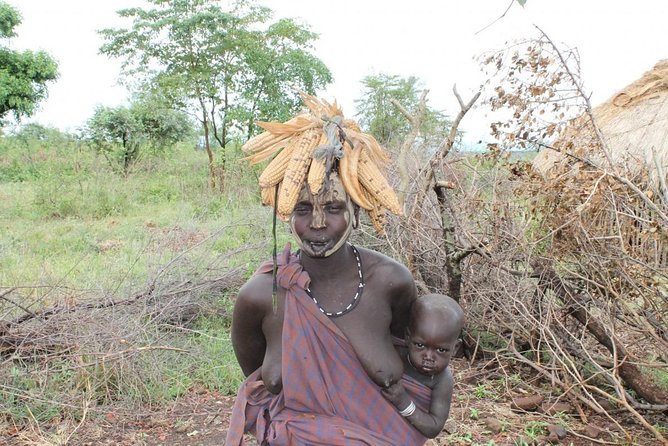
Day 7 is the trip’s most distinctive cultural outing. In the morning, you travel toward Mago Park, where Mursi communities live. The Mursi are widely known for the lip plates worn by some women, as well as donga stick fighting, traditionally associated with competition among men.
These customs are often reduced to quick photographs in travel advertising. A good guide should help you see more than the most recognizable images. The stated purpose of the visit is to gain insight into customs and ways of life, but the schedule does not provide a detailed account of how long you spend in the community or how the visit is organized. Keep your expectations flexible.
The excursion is listed at about five hours, followed by a return to Jinka for lunch and a drive to Karat Konso. That makes this another demanding day. Rough roads, heat, walking, and the need to follow local guidance are all practical reasons the moderate fitness requirement matters.
The stop is powerful because it reaches one of the most remote areas on the route. It is also the part of the tour where respectful behavior matters most. Listen to your guide, ask before taking photographs, and remember that unusual clothing or customs do not make people curiosities.
Lake Langano offers a softer final stop
On Day 8, you leave Karat Konso early and drive to Lake Langano. The lake is one of Ethiopia’s Rift Valley lakes and is known as a place for rest and swimming. After several days of road travel and village visits, the chance to take a dip gives the itinerary a welcome change of tone.
The schedule allows about five hours for the journey and the stop. It does not specify a particular hotel, beach facility, or swimming arrangement, so you should not expect a detailed resort program. Think of Langano as a simple pause before returning to Addis Ababa.
Day 9 brings the final drive to Addis Ababa, with the program ending in the afternoon. The route does not include a final sightseeing activity, so plan any onward travel with enough time and flexibility. The exact end time is not stated.
What the $1,111 price covers

At $1,111 per person, this is not a budget bus ride, but the price includes many of the costs that can quietly add up on a long Ethiopian journey. You get an air-conditioned vehicle, professional guide, scout fee, entrance fees and taxes, airport pickup, and eight breakfasts, eight lunches, and eight dinners.
That meal coverage is important. The tour lasts nine days, and remote southern routes may offer fewer easy choices than Addis Ababa. Alcoholic drinks are excluded, as are services not specifically listed.
The value depends on what you want. If you are comfortable arranging local transport, permits, guides, and meals yourself, you might find a cheaper independent route. But the Omo Valley is remote, the schedule covers a large area, and the included guide and vehicle reduce the work of coordinating each transfer.
The maximum group size is 20. That is small enough to be workable, though not intimate. Group size can affect how quickly you move through village visits, markets, and photo stops, so ask the operator about the expected number for your departure.
Who will enjoy this route most
I would choose this tour if you want a broad first look at southern Ethiopia and prefer support with transport and local arrangements. It suits people interested in anthropology, archaeology, wildlife, food, photography, and long overland journeys.
You should be comfortable with early departures, extended drives, changing conditions, and a full schedule. The moderate fitness requirement is not a throwaway line. The itinerary includes boat travel, village excursions, market walking, and the Mago Park outing, on top of long transfers.
This is less suitable if you want a slow holiday with generous free time. It is also not ideal if you need precise hotel details, fixed event times, or guaranteed access to a particular ceremony. The bull-jumping event is dependent on timing, and the Key Afer market is tied to Thursday.
The operator has arranged customized trips for people who requested changes, including longer journeys. That suggests it is worth asking about adjustments before booking, though you should not assume that every change is included in the advertised price.
Practical details before you reserve
Airport pickup is offered, and the meeting start time is 8:30 a.m. Confirmation is received at booking. The tour ends in Addis Ababa on Day 9, after the afternoon drive.
You can cancel for a full refund if you do so at least three full days before the experience start time. Cancellations made inside that period are not refunded, and changes made inside the same window are not accepted.
The itinerary does not provide hotel names, exact driving distances, room arrangements, or a detailed packing list. Ask about those points before paying, especially if you have specific lodging needs or limited tolerance for long road days.
Should you book the Omo Valley tour?
Book it if you want range and reach: Addis Ababa’s museums, Tiya’s ancient stones, Lake Chamo wildlife, Dorze food and houses, Erbore and Hamer communities, the Key Afer market, Mursi country, Konso, and Lake Langano in one organized trip.
Think twice if you dislike long drives or want every cultural event guaranteed. The strongest parts of the journey come from its remote route and varied stops, but those same qualities bring rougher logistics and less control over timing.
For a first organized visit to the Omo Valley, the included vehicle, guide, meals, fees, and airport transfer make the $1,111 cost reasonable. Go with patience, respect, and a willingness to spend serious time on the road, and this can be a memorable introduction to one of Ethiopia’s most distinctive regions.
FAQ
How long is the Omo Valley tour?
The tour lasts approximately nine days, beginning with arrival in Addis Ababa and ending with a return drive to Addis Ababa on Day 9.
What is the price per person?
The listed price is $1,111 per person.
Is airport pickup included?
Yes. A company representative meets you at the airport on arrival and transfers you to a city-center hotel.
Which communities are included in the route?
The itinerary includes visits connected with the Dorze, Erbore, Hamer, Mursi, and Konso communities, along with other people from the South Omo region.
Is food included?
Yes. The tour includes eight breakfasts, eight lunches, and eight dinners. Alcoholic beverages are not included.
Is transportation included?
Yes. An air-conditioned vehicle is included, along with a professional guide.
Will the tour visit a local market?
Yes. The route includes the Key Afer market, which takes place every Thursday and attracts Hamer, Benna, Konso, Ari, and other people from South Omo.
Is the Hamer bull-jumping ceremony guaranteed?
No. The itinerary says you may attend a bull-jumping ceremony near Turmi if you are lucky, so it depends on timing and local circumstances.
What fitness level is required?
A moderate physical fitness level is recommended. The trip includes long road journeys, boat travel, village excursions, market visits, and the Mago Park outing.
Just added around Addis Ababa
- Locally crafted beer and wine tasting and nightlife in Addis tour★ 5.0 · 6 reviews
- Addis Ababa City Tours Full-Day Tours★ 5.0 · 5 reviews
- Two days Lake Wenchi and Menagesha Forest★ 5.0 · 3 reviews
- Stunning Views Wonchi Crater Lake a Private Day Trip★ 5.0 · 3 reviews
- A day trip to Wench crater Lake★ 5.0 · 4 reviews
- Day Trip to Tiya UNESCO Site & Melka Kunture Archaeological Site★ 4.5 · 3 reviews
- Perfect Escape from Busy Addis Ababa: Debre Libanos & Blue Nile Gorge excursions★ 5.0 · 6 reviews
- Local Ethiopian Food Tour★ 4.0 · 4 reviews
Tribal Tours, compared.
6 Days Omo Valley Tribes Tours From Addis Ababa
Read our review →
9 Days Tours To Danakil Depression, Simen MNP, Lalibela With Omo Valley Tribes
Read our review →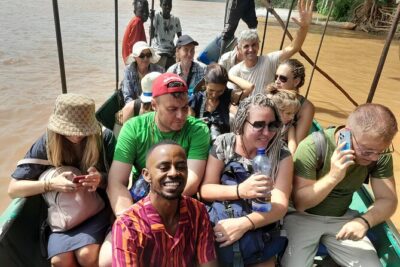
5 Day Private tour to the Omo Valley Tribes and Adventure Tour
Read our review →



6 Days Omo valley Tribal Tour (Starts Arba Minch End Jinka)
Read our review →
Browse the lists this tour appears in